the initial impulse move … is the DNA
Posted on December 13, 2013 Leave a Comment
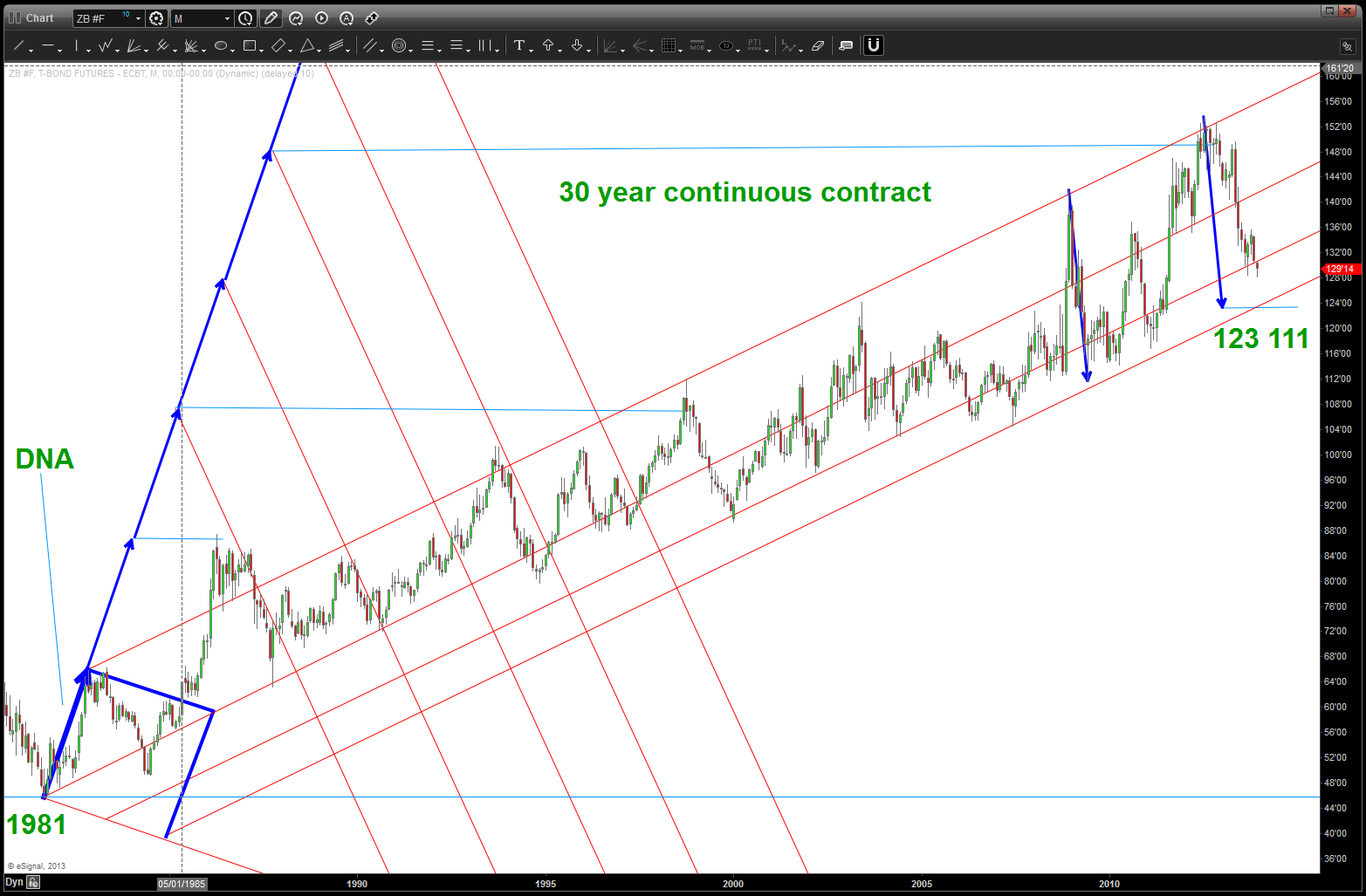
30 year fixed income continuous contract
spent last night w/ my wife of 23 years and best friend since we were 15, at the Andrea Bocelli concert …as a self proclaimed market musician on many occasions I found myself w/ eyes closed trying to hear the different chords/tempo and harmony being blended. it was pretty cool …so this morning I thought I would take you down a trip along “harmony” lane and talk about the initial impulse move or DNA of ANY liquid instrument.
the longer the chart time frame the better .. we have shown the ability of “nodes” from the late 1800’s taking part in moves that have occurred in the 2000’s. so if you have long term data, use it. in this case we are looking at the low on the bonds from 1981. this low created the very powerful 30+ year move in fixed income.
1. the bold blue arrow is the “seed” or “DNA” that begins this move … do you know it at the time? probably not. HOWEVER, after the first pullback (on a long term chart) you can start to assume a major inflected top or bottom is in place and start the trip down the “harmony” lane.
2. from that initial impulse move up (note it takes it account the slope of the move – you include PRICE and TIME) draw a SQUARE. Now, using “standard” trend line tools draw a 45 degree angle and then, well, your done. connect the 45 degree angle to the top and the low of the box and simply take a look at what appears. THE HARMONY/GEOMETRY of the MOVE.
now, as far as this chart goes we have a lot of “stuff” going …
1. note the largest corrective move in the 30+ year BULL RUN takes us into the 123 11 area.
2. note, this largest corrective move occurred during the 2008 thumping in equities. it’s already 3/4 over and equities haven’t even moved … hmmm.
3. if you look at the wave structure is sure looks like we are in wave 5 of 3 that “should” take us to attack that level indicated by the horizontal blue line.
4. note how the “trend line” and the “measured move correction” come together right in/around the 123-124 level.
5. let’s not forget, this is a massive BULL run so it would only make sense that the trend will continue. this 123-124 level will be the line in the sand, IMHO (h= humbled) opinion.
stay tuned ….
here’s the dollar index, takes about 10 minutes
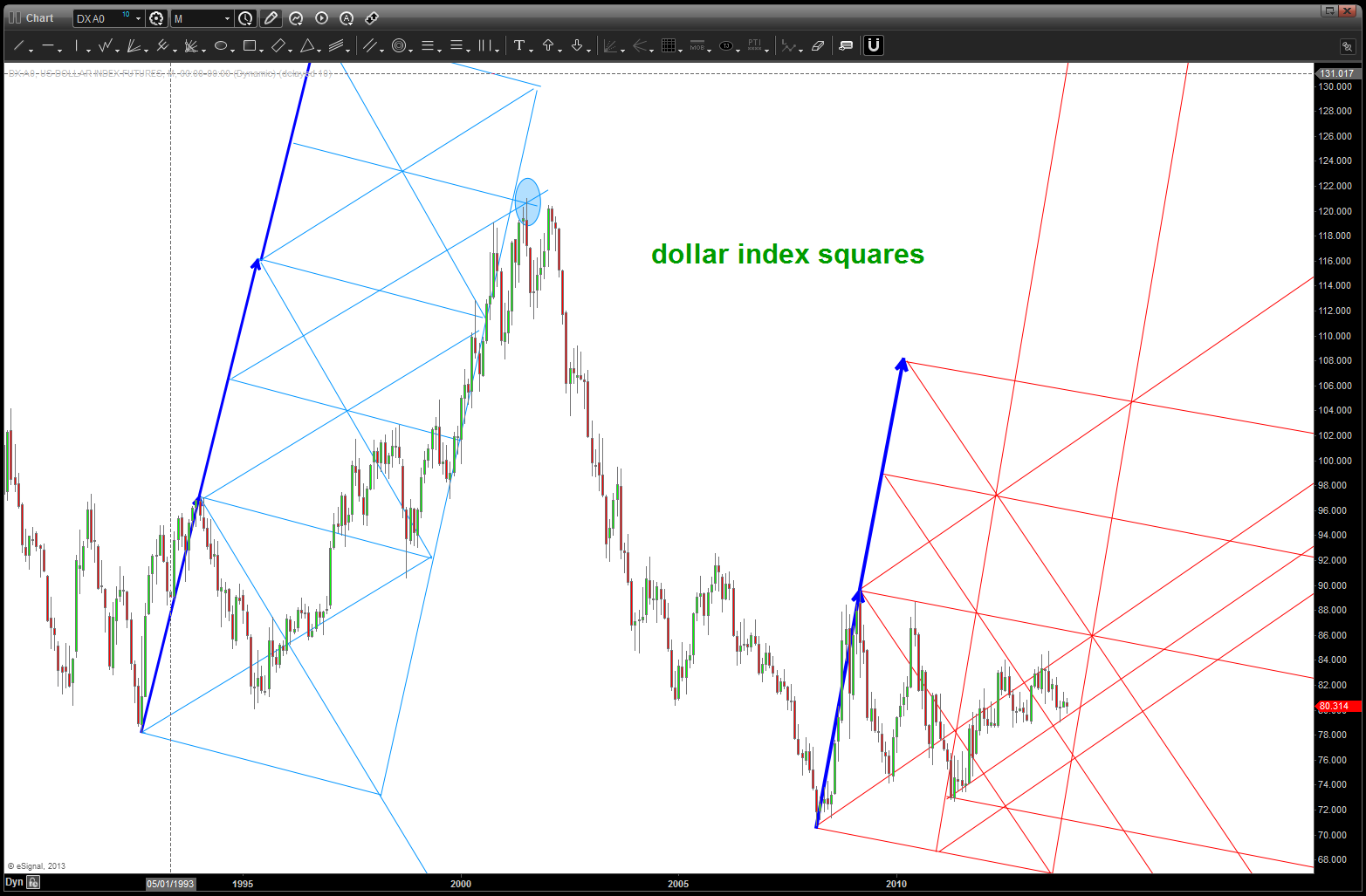
dollar index squares
GOOG and AAPL update
Posted on December 12, 2013 Leave a Comment
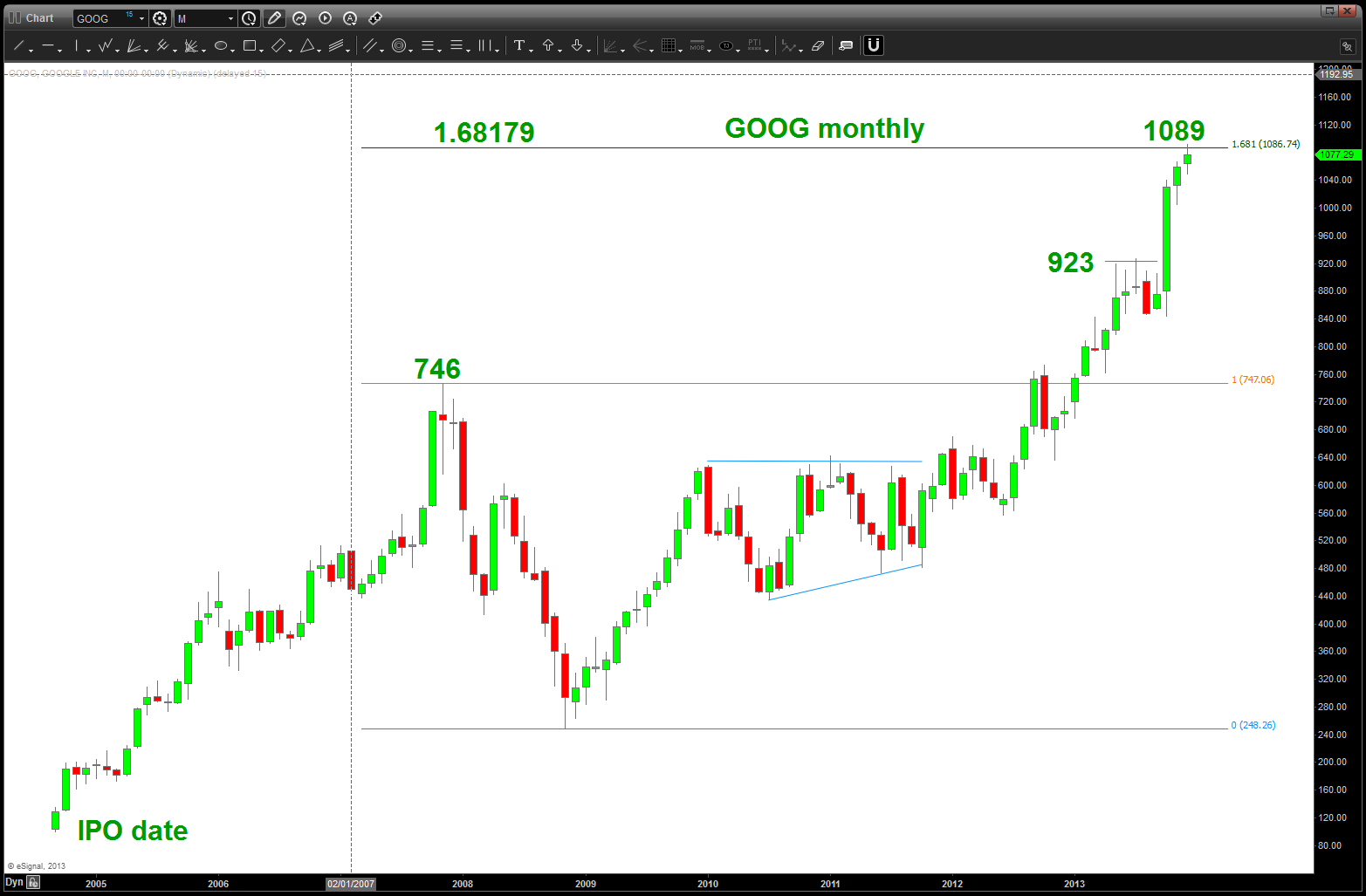
I should have known … for those who have been reading this blog, we’ve seen 1.68179 come up a lot lately. It was the extension target on an intraday basis for the emini, it was a price projection ratio (1.68179-1 – .68179) for the Pound vs USD and a host of other. the reason I “should have known” is a piece was put out on first call to SHORT GOOG at/around 1075 and stop out above 1082 (or something like that) I didn’t take into account the 1.68179 ratio and that’s what looks like it did it …
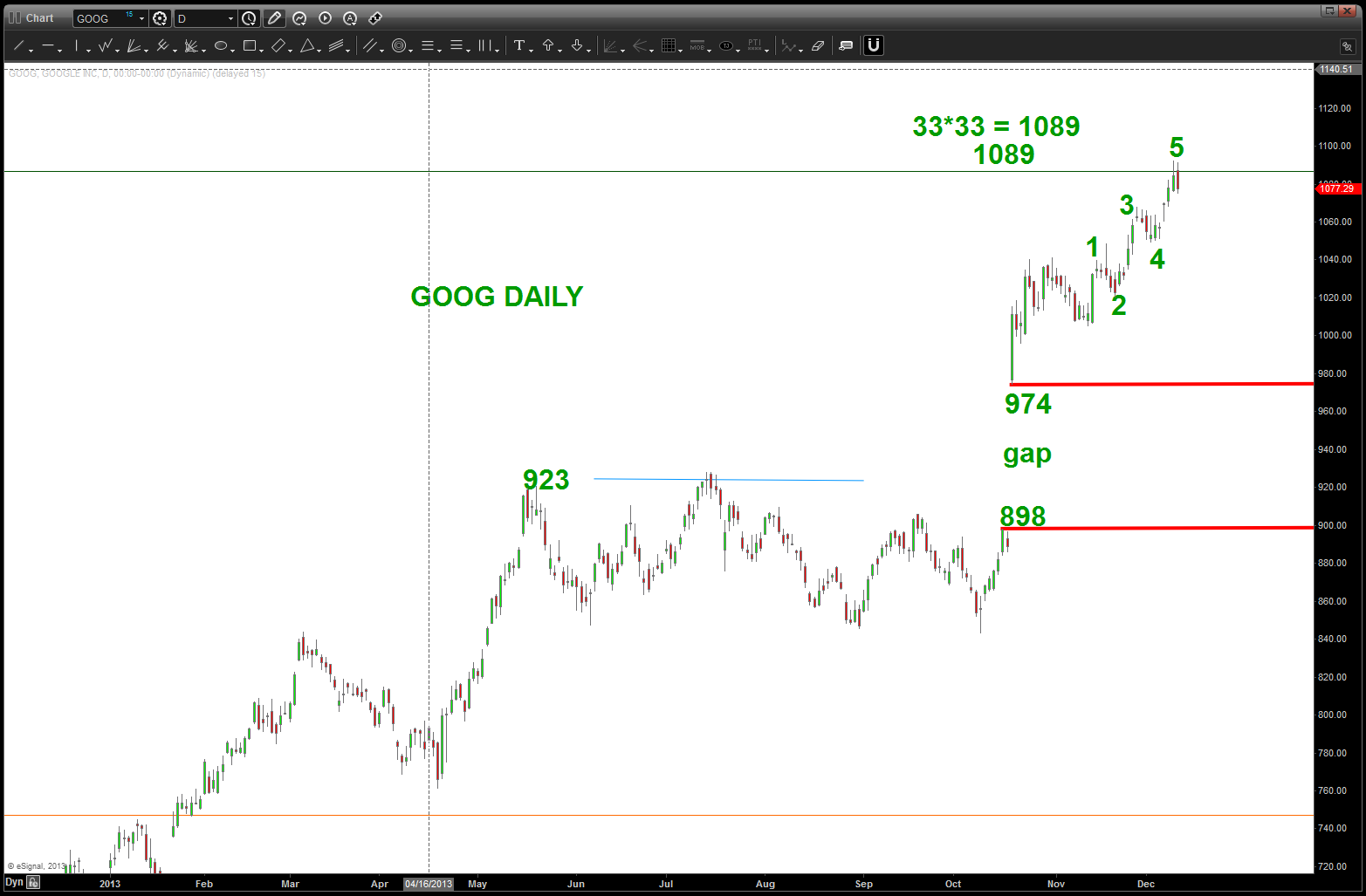
- the 898-974 GAP will get targeted and ultimately should get filled. am I expecting BIG SUPPORT w/in that entire ‘window’? YES …
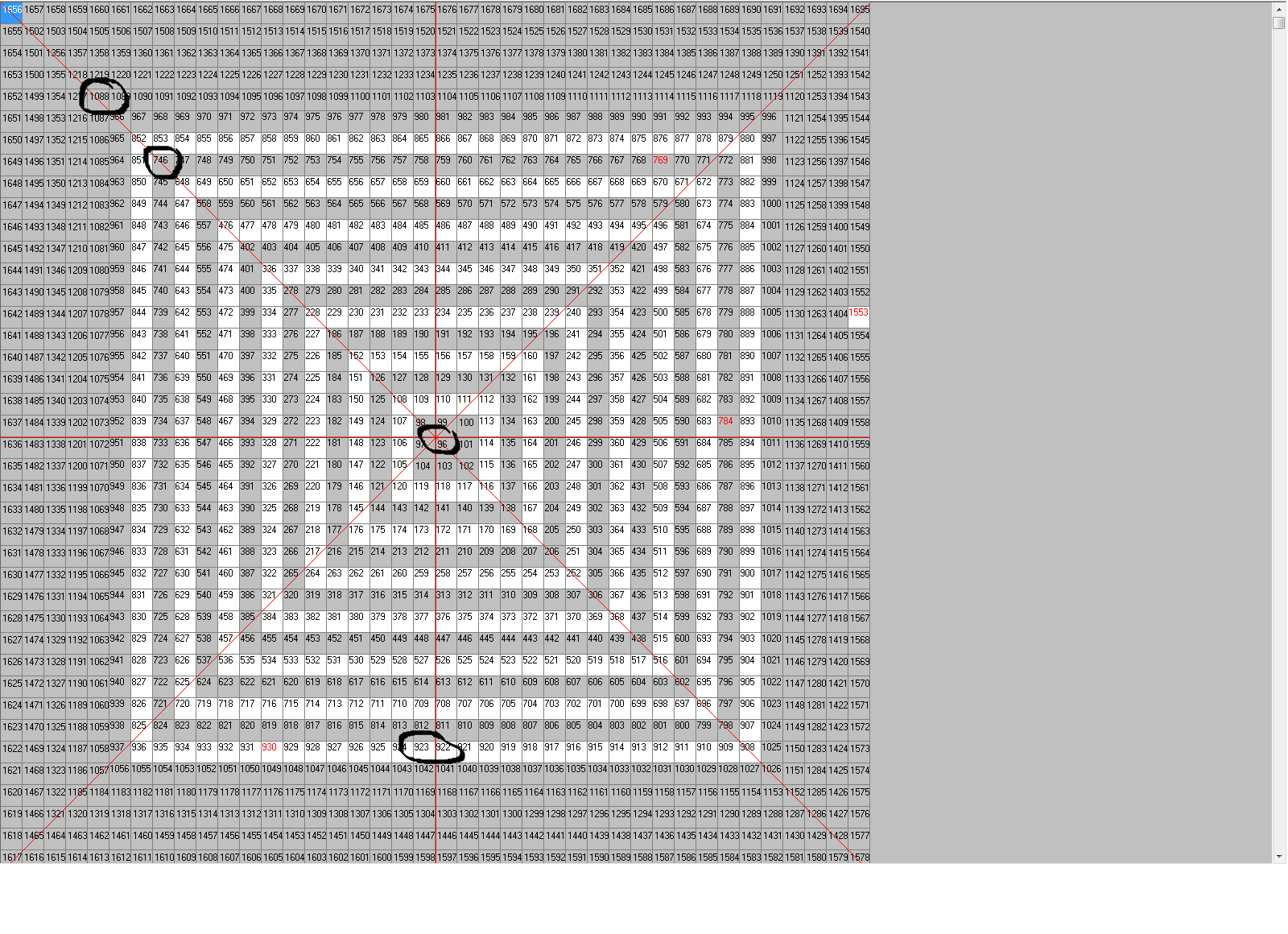
- recent square of 9 targets shown w/ the IPO price of 95 in the center (hint hint)
- note the 5 waves up/into the recent high
- 33*33 = 1089
- the Defense Index sold off nicely yesterday … not sure WHY it works, it just looks the exact same.
- full disclosure, a short was tried at pattern completion (AB=CD) in/around 920. we’ll wait right now, but this sure looks like major resistance.
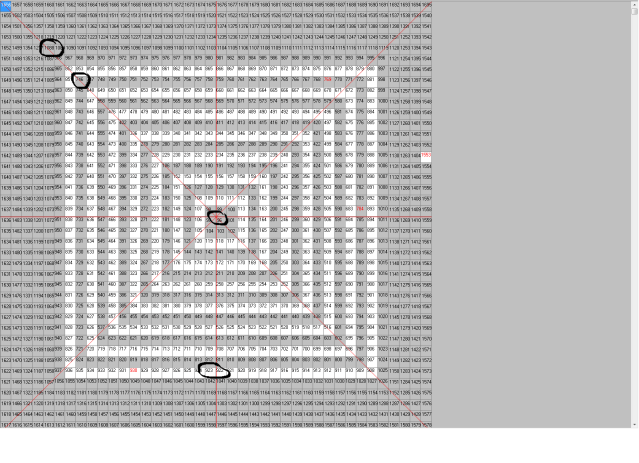
square of 9 targets
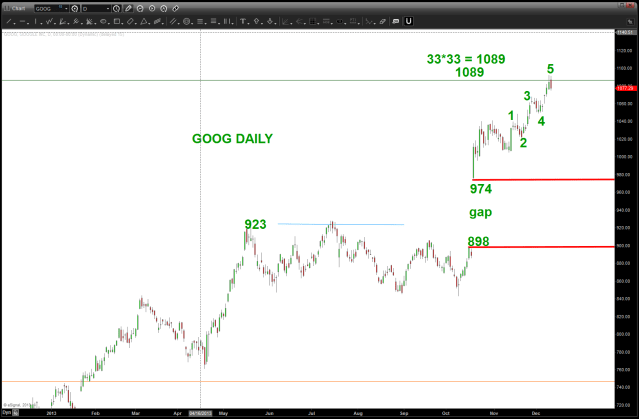
GOOG daily
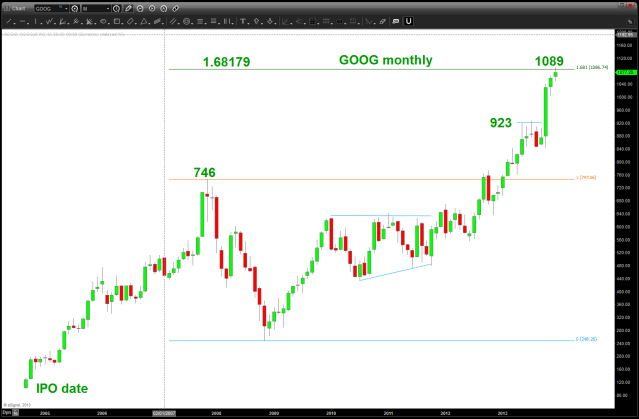
GOOG monthly
AAPL completed SELL pattern up against 2009 trend line. just a tad bit higher is the .618 retrace but it sure looks like this is it for now.
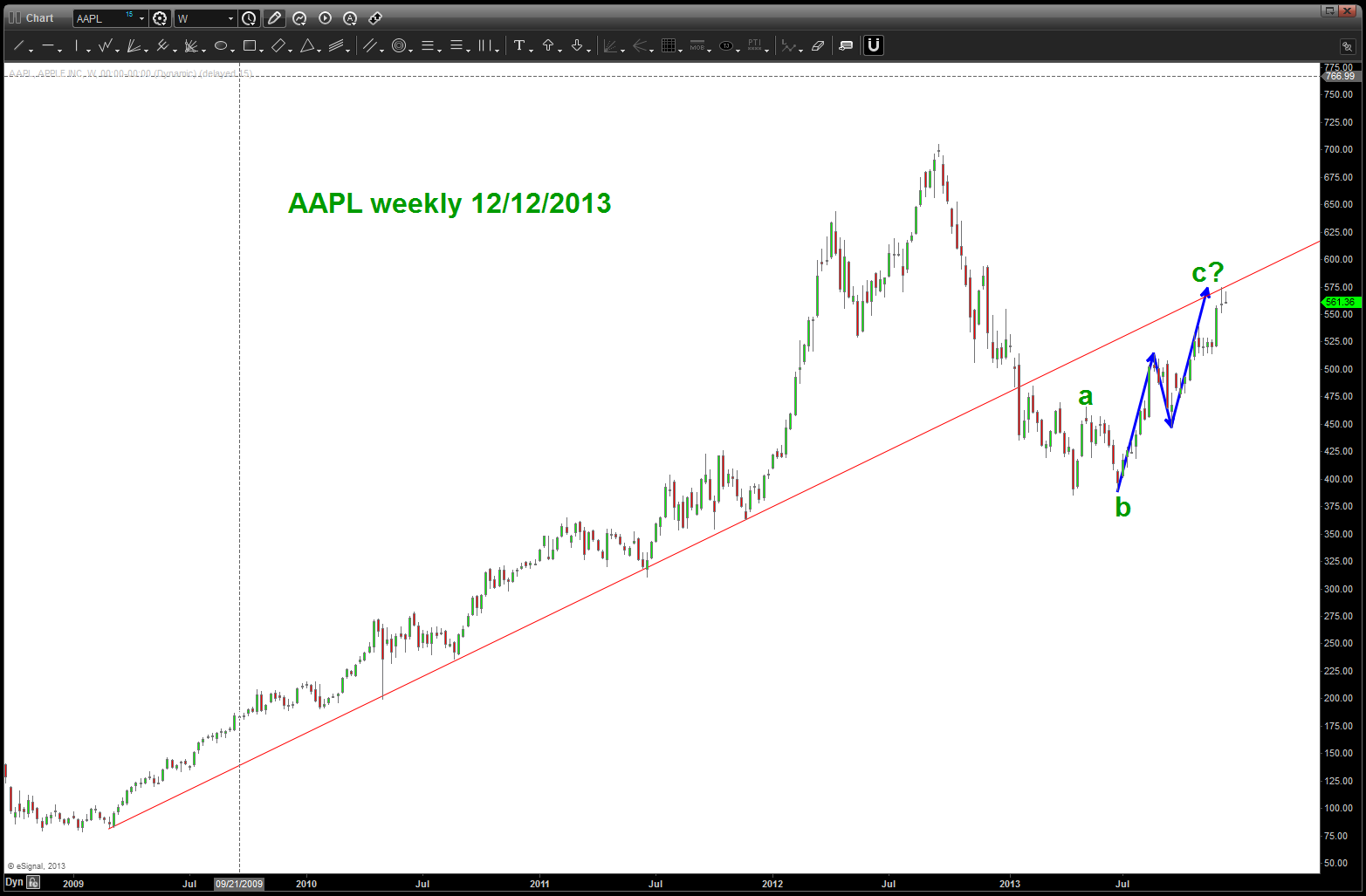
AAPL
Emini update 12/10/2013
Posted on December 10, 2013 1 Comment
of course it would have to pick the 3rd or highest target, but the high yesterday did fit into the wave structure correctly and was 1.618179 of the B leg extension and 1.618*a so that level was KEY. now, does it hold or not? if it does then we have begun an earnest wave down. I say earnest because of all the “other” charts that have been posted w/ regards to major patterns being completed across the board …
the key here is the USD index right now … as long as it keeps losing ground (I think it’s ending to the downside) then stocks will hold up, for a while. wasn’t it interesting that both APPLE and GOOG got some love yesterday (were up pretty big) but “everyone else” wasn’t …?
here’s the post showing the targets on the emini BEFORE NFP and days before anything occurred:
https://bartscharts.com/2013/12/06/nfp-and-the-emini/
here’s the updated chart:
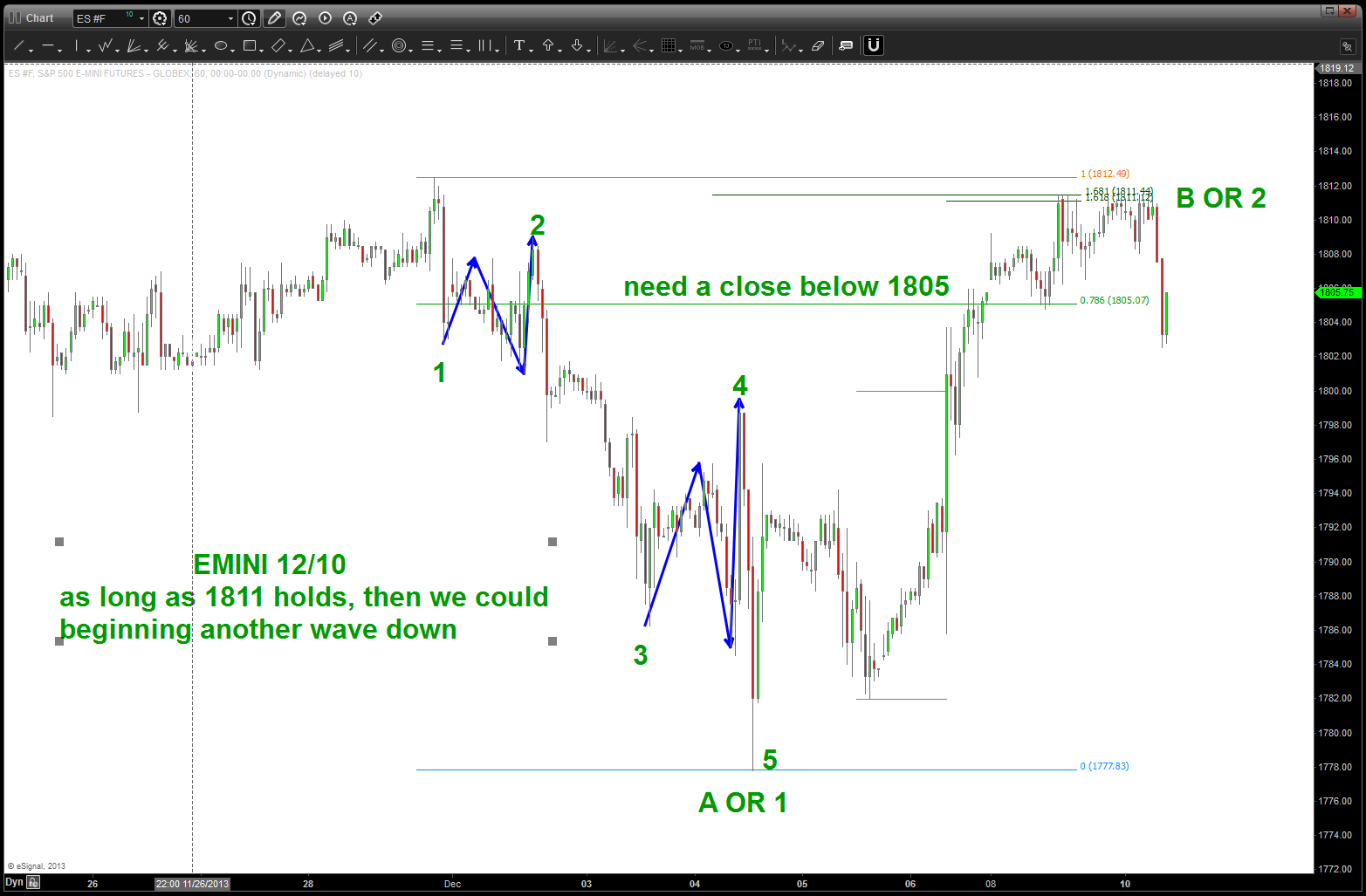
EMINI
rock on, ok?
GBP struggles …
Posted on December 9, 2013 Leave a Comment
https://bartscharts.com/2013/11/26/great-british-pound-again/
here’s where we are …
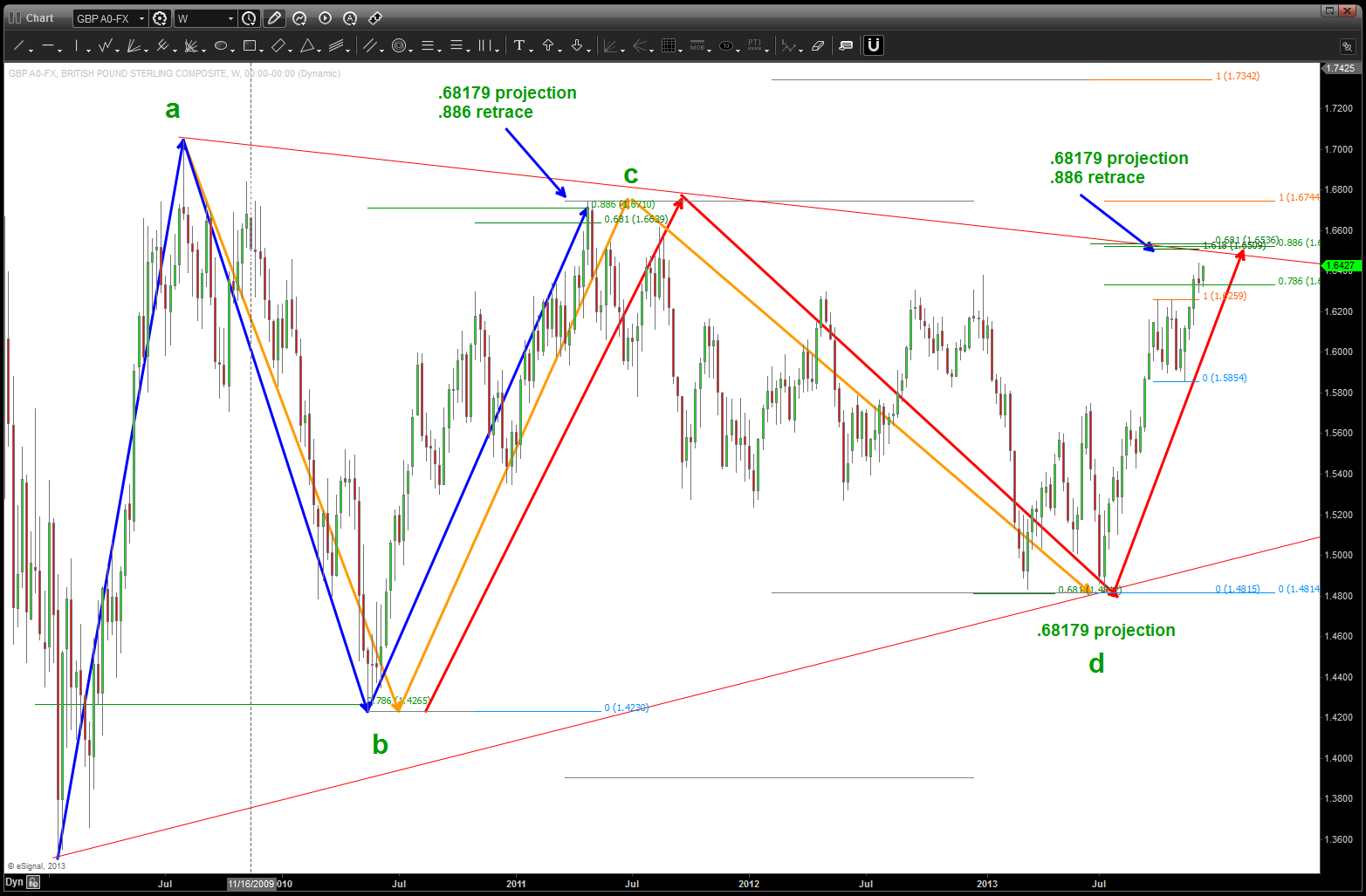
GBP last target for the triangle thesis
we have discussed in former posts the importance of the 1.68179 ratio and it’s relationship to the equal octave scale of music and how, at times, the .68179 price projection technique is very helpful. in a triangle, you have 5 waves – a,b,c,d,e and they are “normally” w/in the .618 relationship. well, in the case of the Pound you can see .68179 and .886 have been very strong ratio’s. so, this entire triangle thesis is about 50 pips from become a reality or getting blow out of the water. I tested a small short last month and was stopped out … since then, I have been waiting for 5 waves at a lesser degree (time frame) to support the thesis. It hasn’t happened ….so, this final level as shown in the chart above will be my line in the sand. this has been one heck of a fight …
Defense Index and GOOG an amazing correlation ….things that make you go hmmmm….?
Posted on December 8, 2013 Leave a Comment
perhaps you are aware, perhaps you are not … I spent 11 glorious years in the United States Navy flying F-14 Tomcats off the pointy end of an aircraft carrier. It was a great ride …because of that, I still consult from time to time for the Defense, Aerospace and IC sectors …keeping an eye on the Defense Industry is a passion and a something that I love to do ….
I say this because the patterns are an objective way to look at the market. even w/ all of the doom and gloom about sequestration, budget cuts, troop draw downs the defense sector has steadily gone UP. even the past couple years … I’ll be honest and tell you that, believe it or not, a lot of these companies have amazing diversity and do IT, CYBER, Health Care, high tech solutions, etc. Your Boeing, Lockheed, etc are AMAZING companies that have their fingers in EVERYTHING.
That being said … the SELL PATTERN is appearing. Objectively, the Defense Index is coming close to a major sell pattern. As I was doing work on this sector I was called away to cook some awesome steaks (thanks to my room mate who taught me how to absolutely nail cooking them …) when I came back to the charts I THOUGHT I WAS CHARTING GOOGLE. I was confused because I have a lot of work on that chart (GOOG) and there was NO WORK on the chart I was looking at…so, I overlaid GOOG on top of the DEFENSE INDEX and just sat back and said … I have to post this. Draw your own conclusion ….
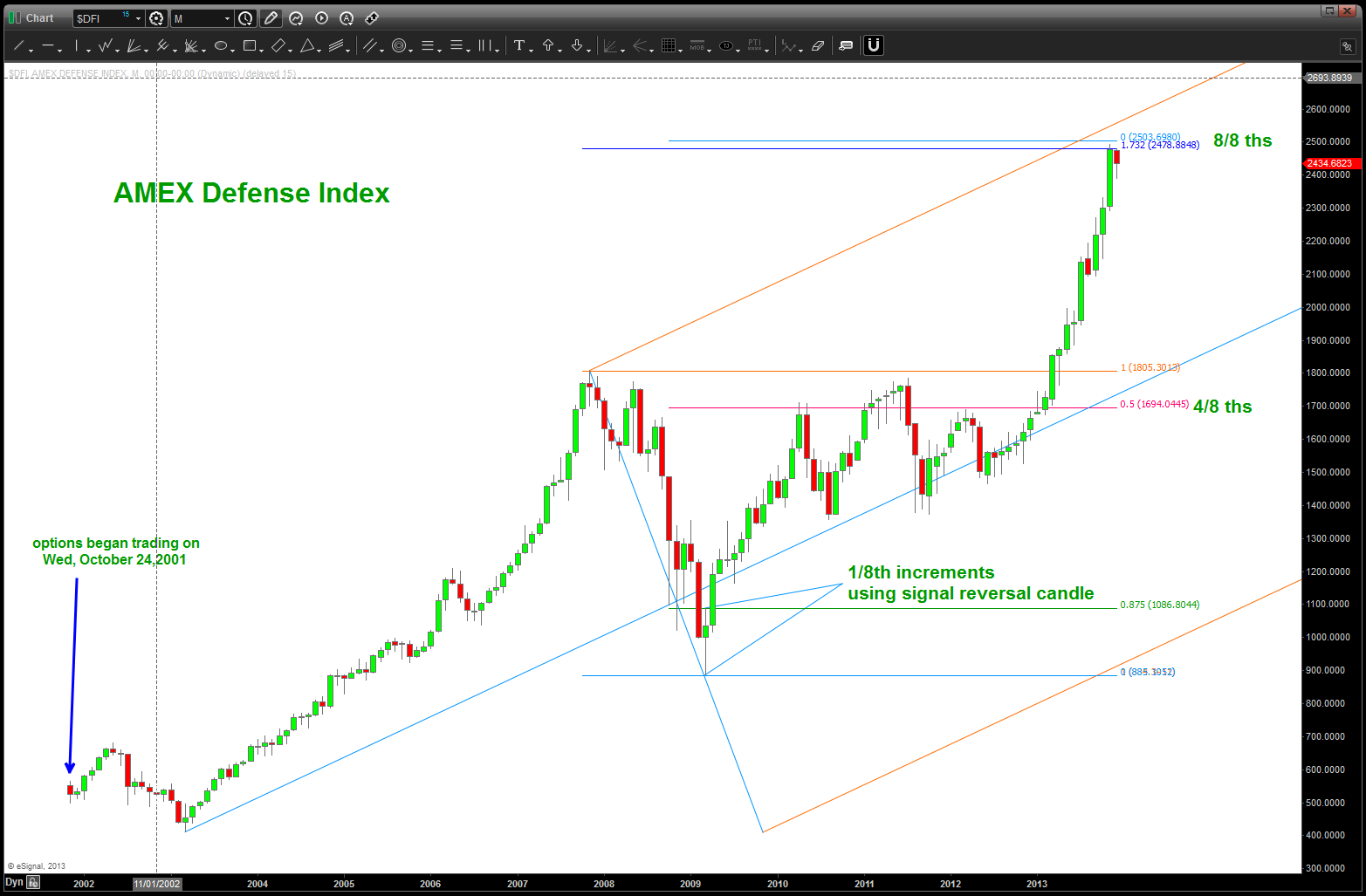
Defense Index … SELL PATTERN complete or just a tad bit higher
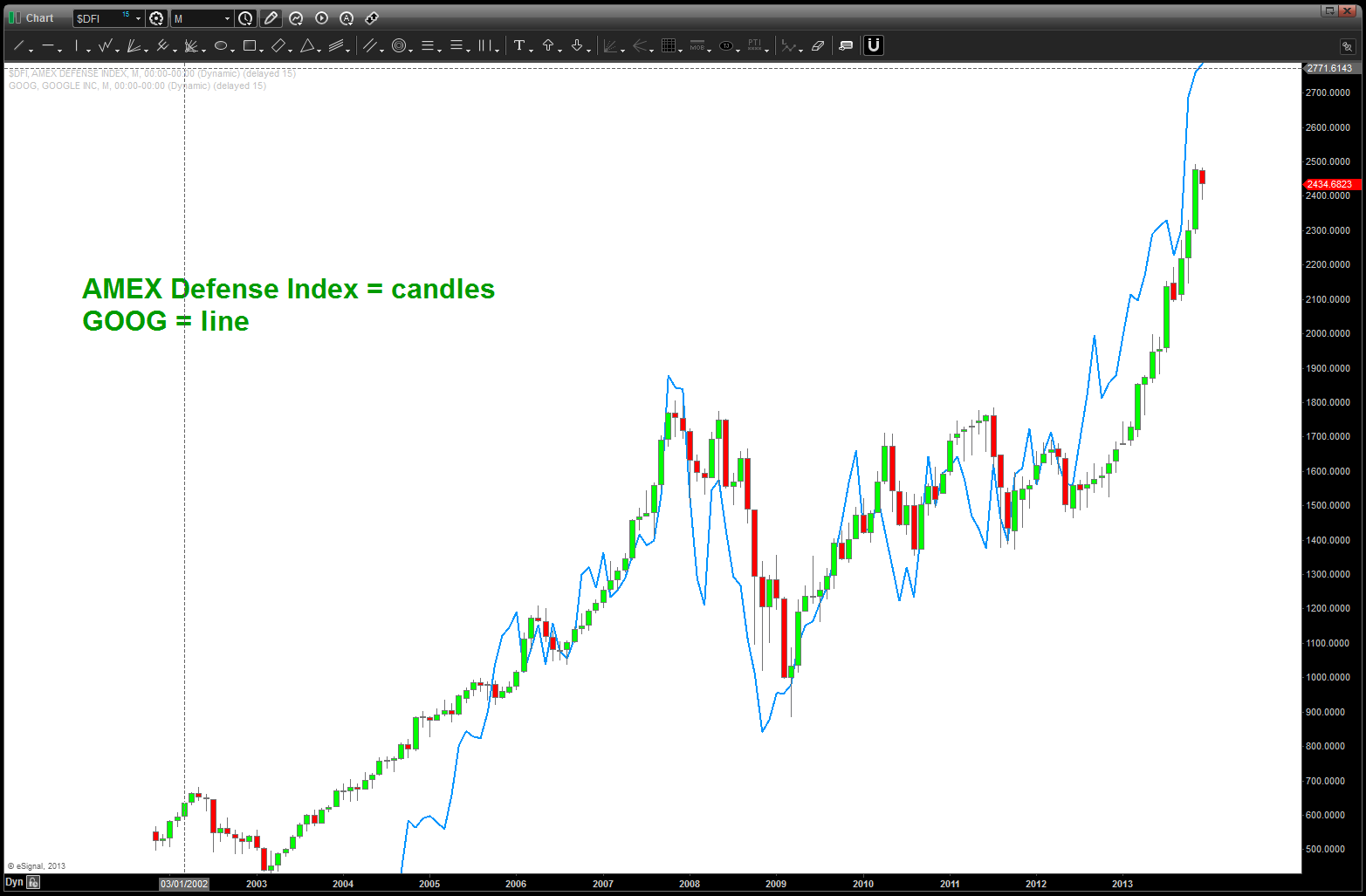
GOOG and the DEFENSE INDEX … look the same, hugh? things that make you go hmmmm
amazing indexes … a tour of the masses
Posted on December 8, 2013 Leave a Comment
28 degrees, snowing, freezing rain and tons of kids running around … I’m not getting old, I’m just getting smarter. I wasn’t interested in going outside in this chaos today in NOVA. However, it was a great time to cruise the charts …it was a fun journey, to say the least.
our first chart is a chart of the NYSE Index …2000+ stocks, unable to be manipulated by the futures market and a mix of international players … it’s a GREAT look at the market. why is this such a great chart? Well, there is an index that tracks the total volume traded on the index and it’s down right scary. I did some research to make sure what I was seeing was correct … there “ain’t no buyers folks”

where is the volume?
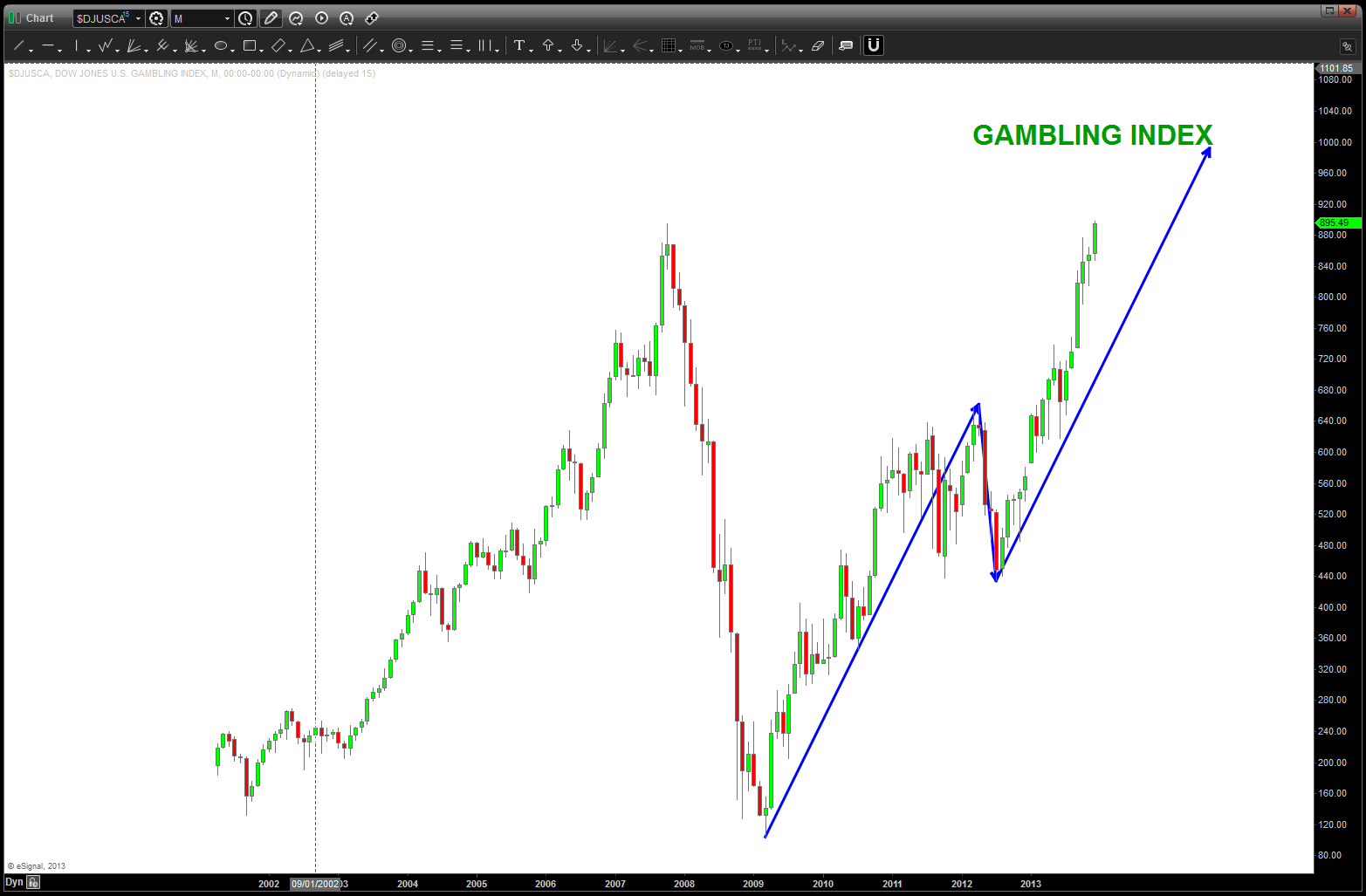
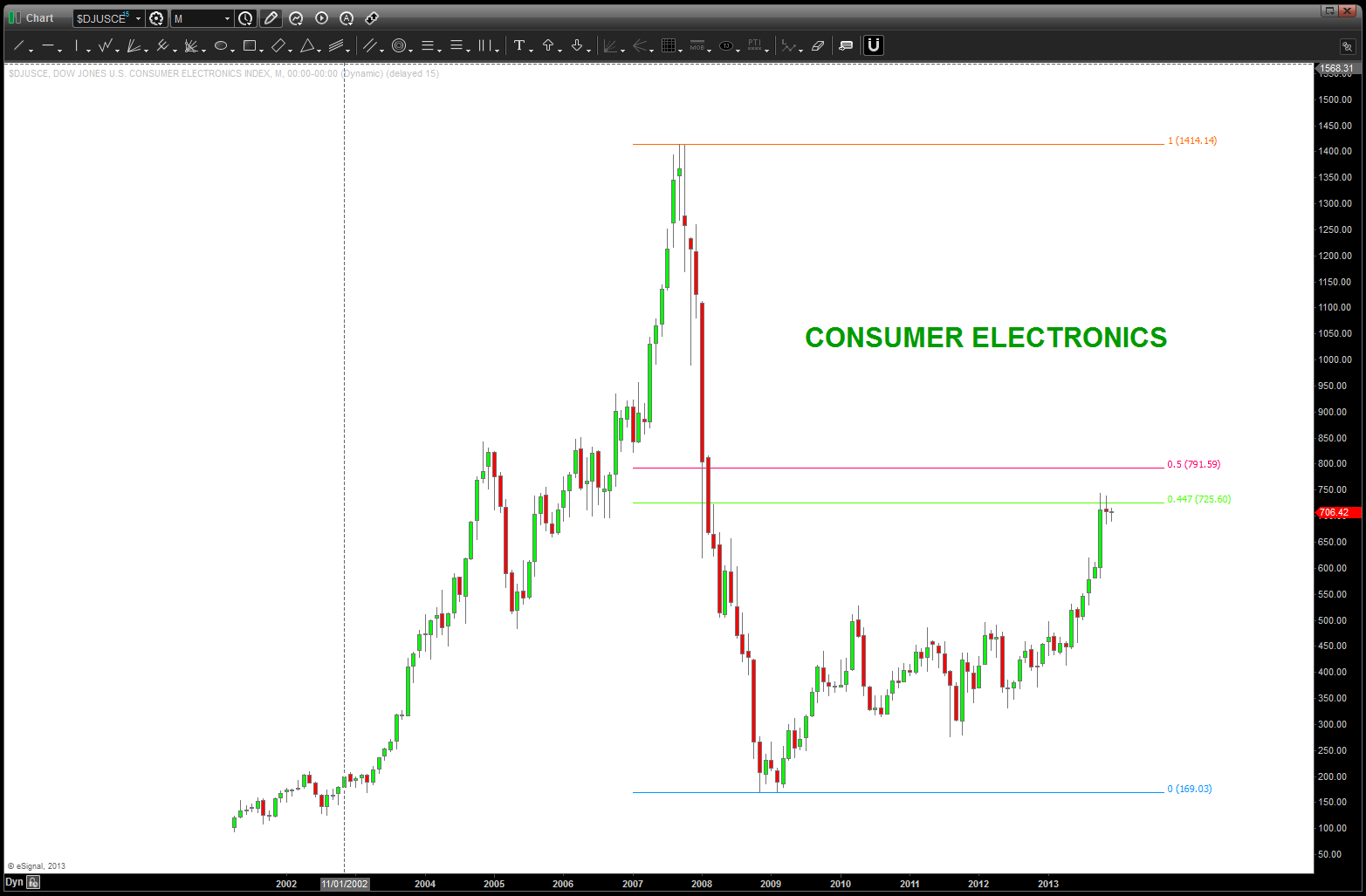
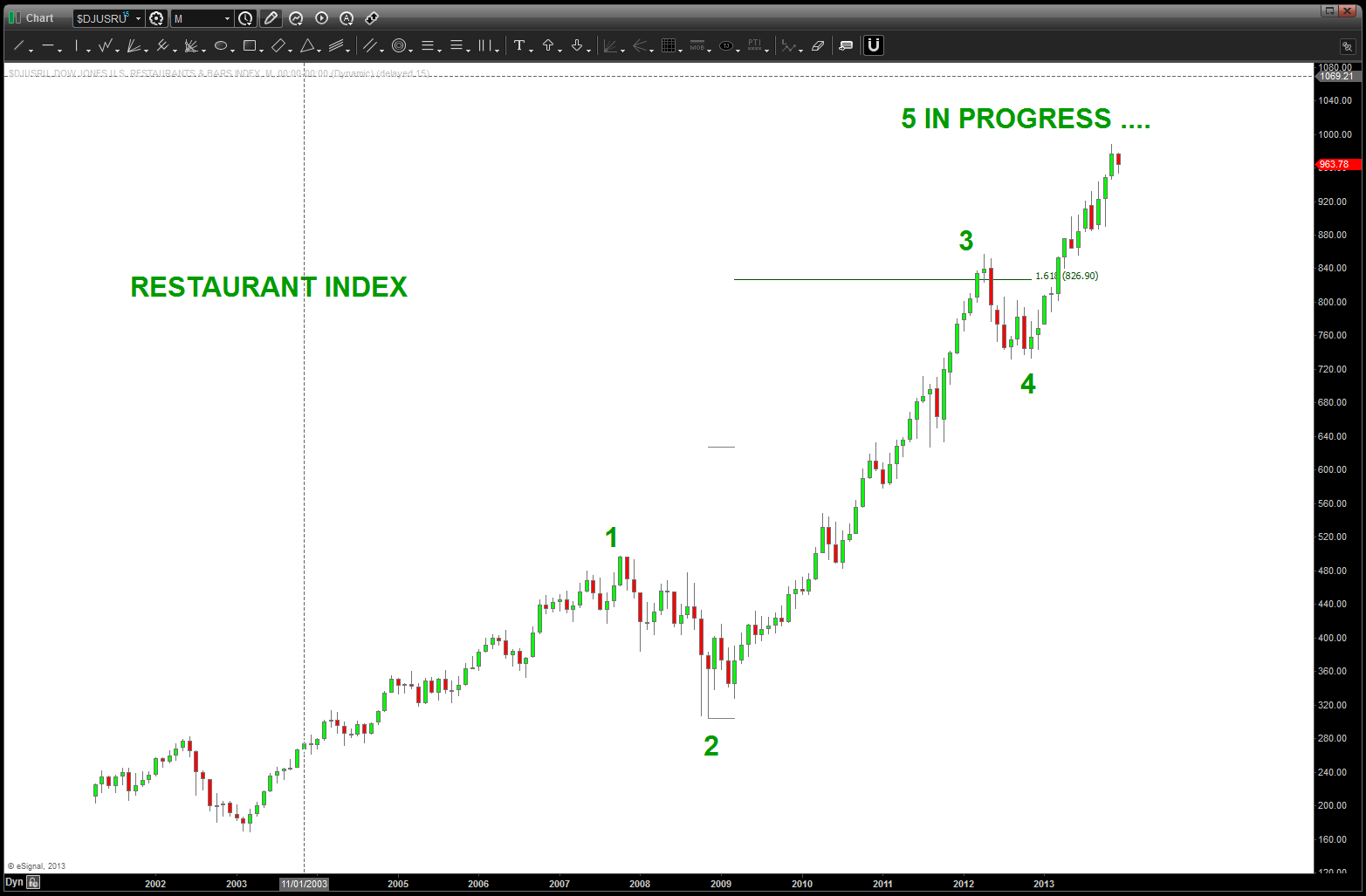
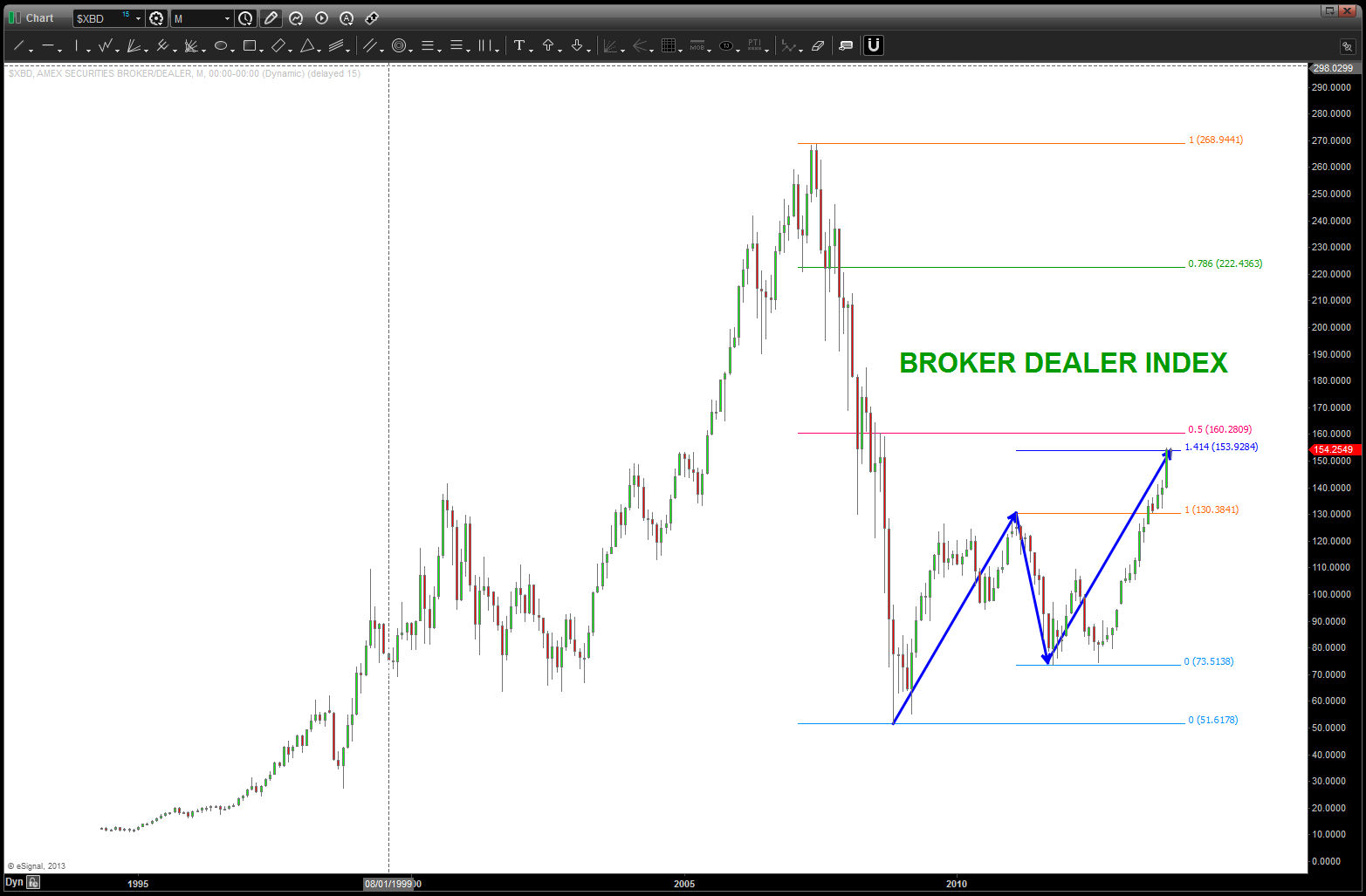
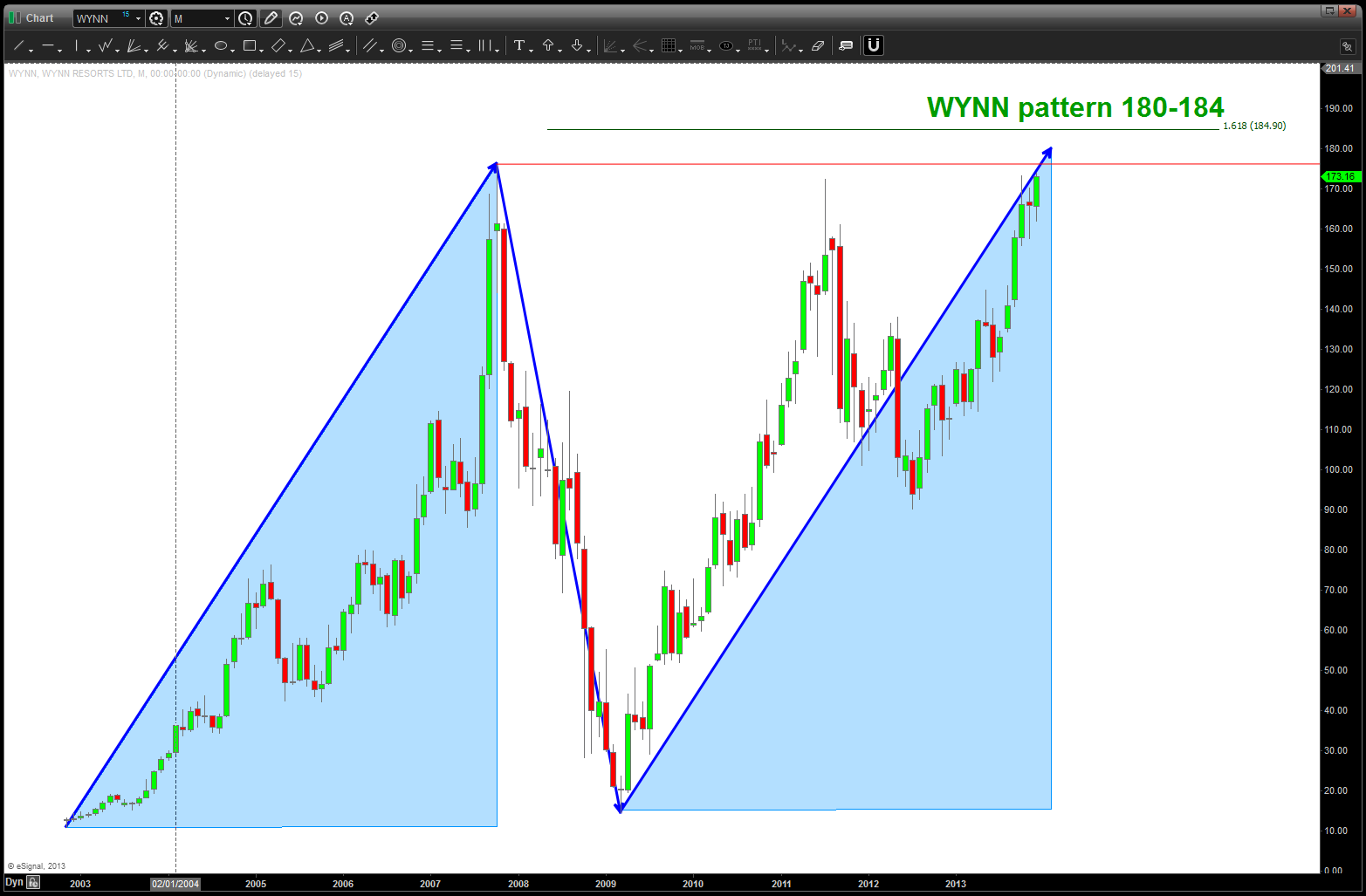
so then I said “what is the general public doing?” what are the indexes that can convey/show the mood of the masses? pretty cool trip into these charts … the bottom line is they ARE ALL SHOWING SELL PATTERNS. Shoes, Restaurants, Brokers, Gambling, Hotels, Consumer Electronics…etc etc etc. So, as a pattern recognition trader that means 1 of 2 things … 1) the PATTERNS work or 2) they don’t. If the WORK we have TOPPED if they DO NOT WORK we haven’t … easy, hugh?
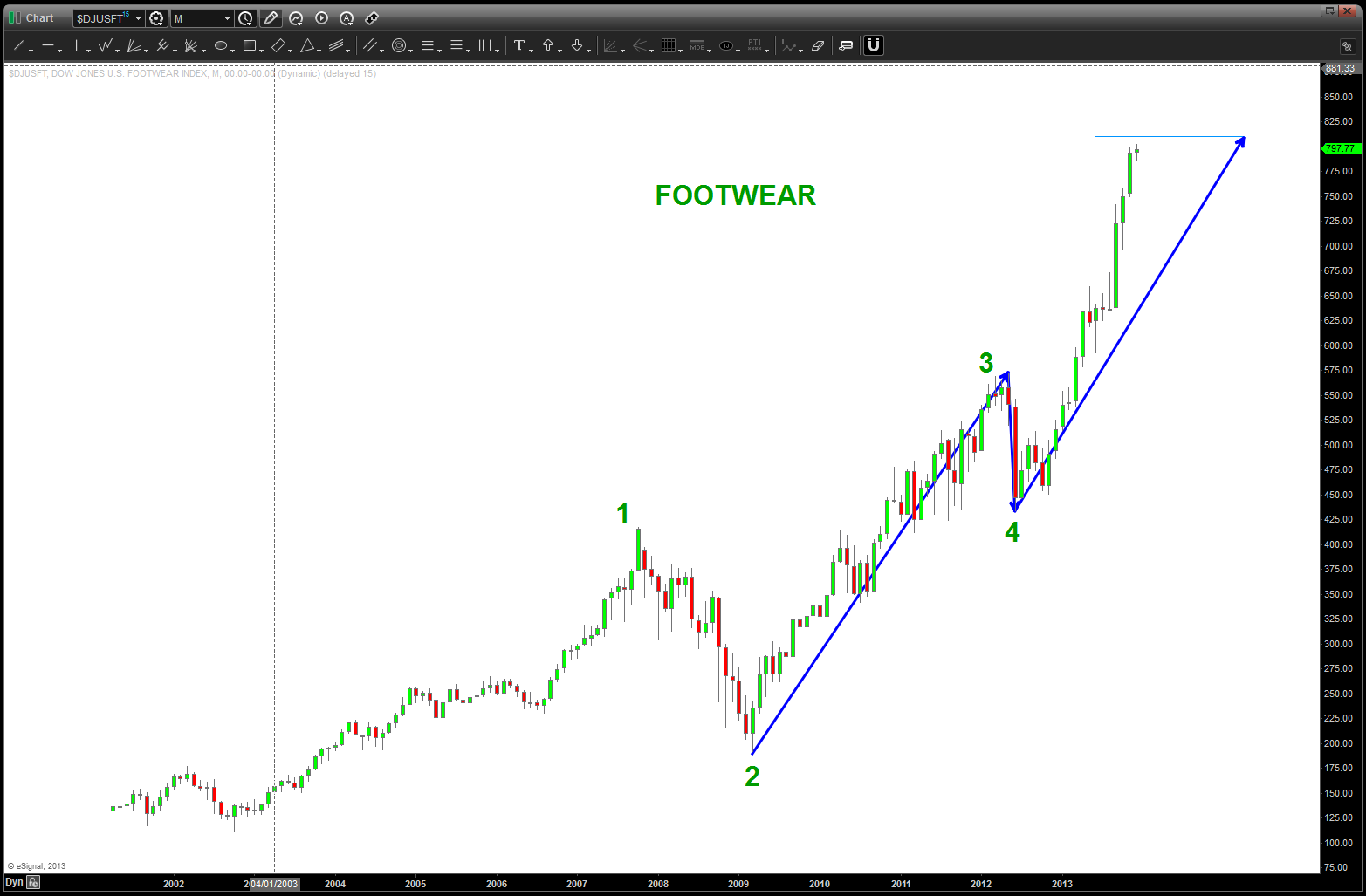
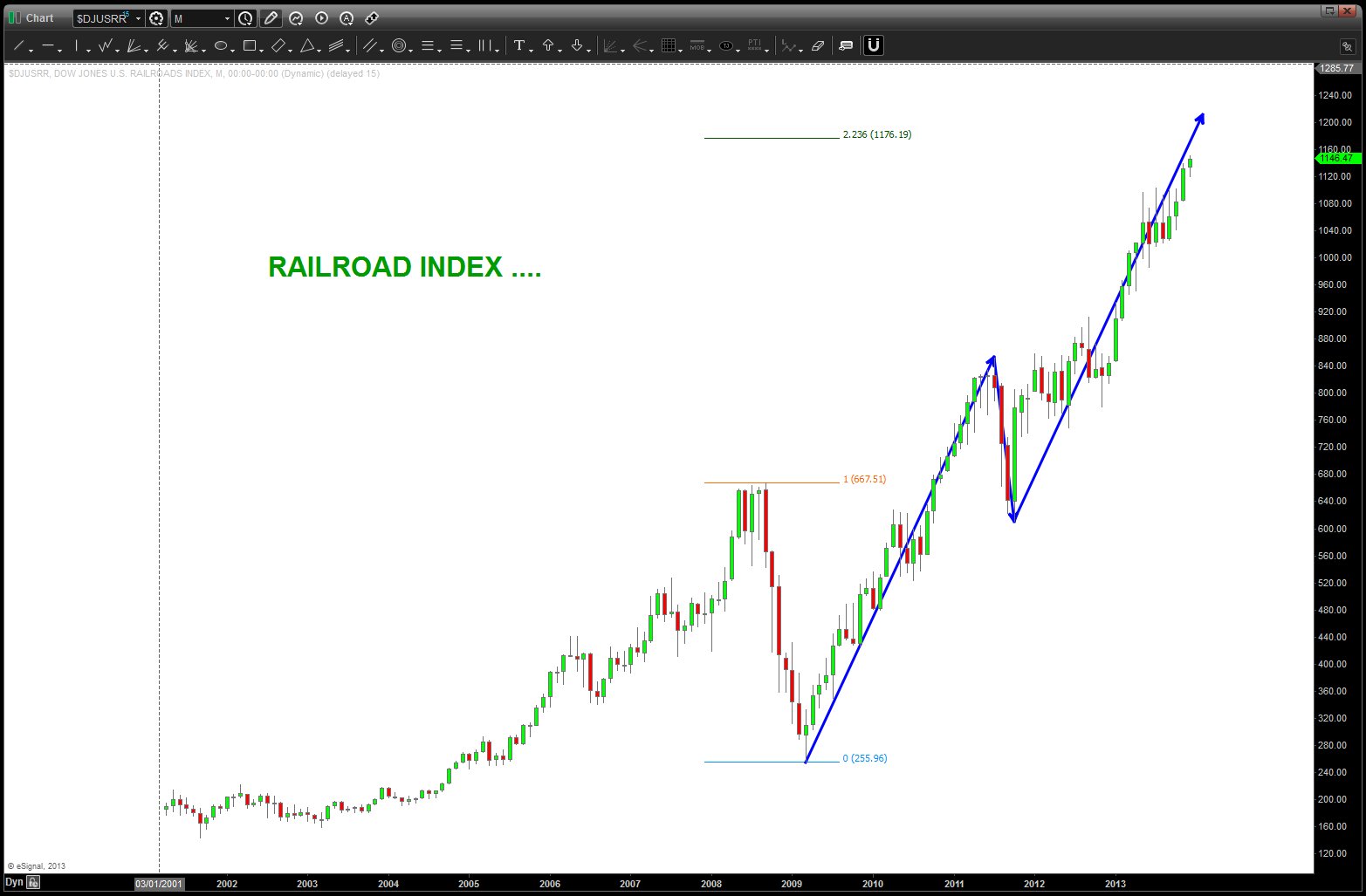
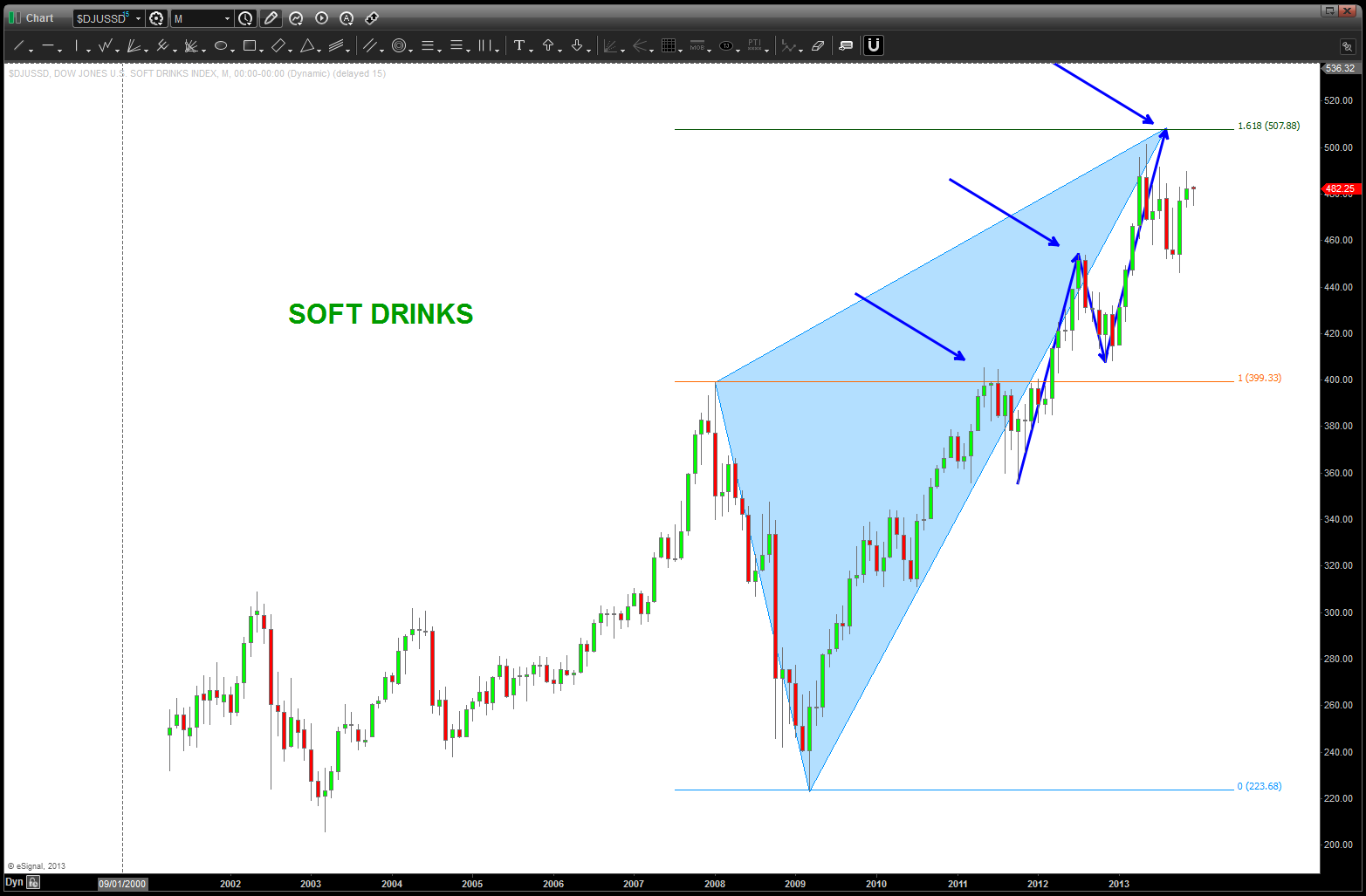
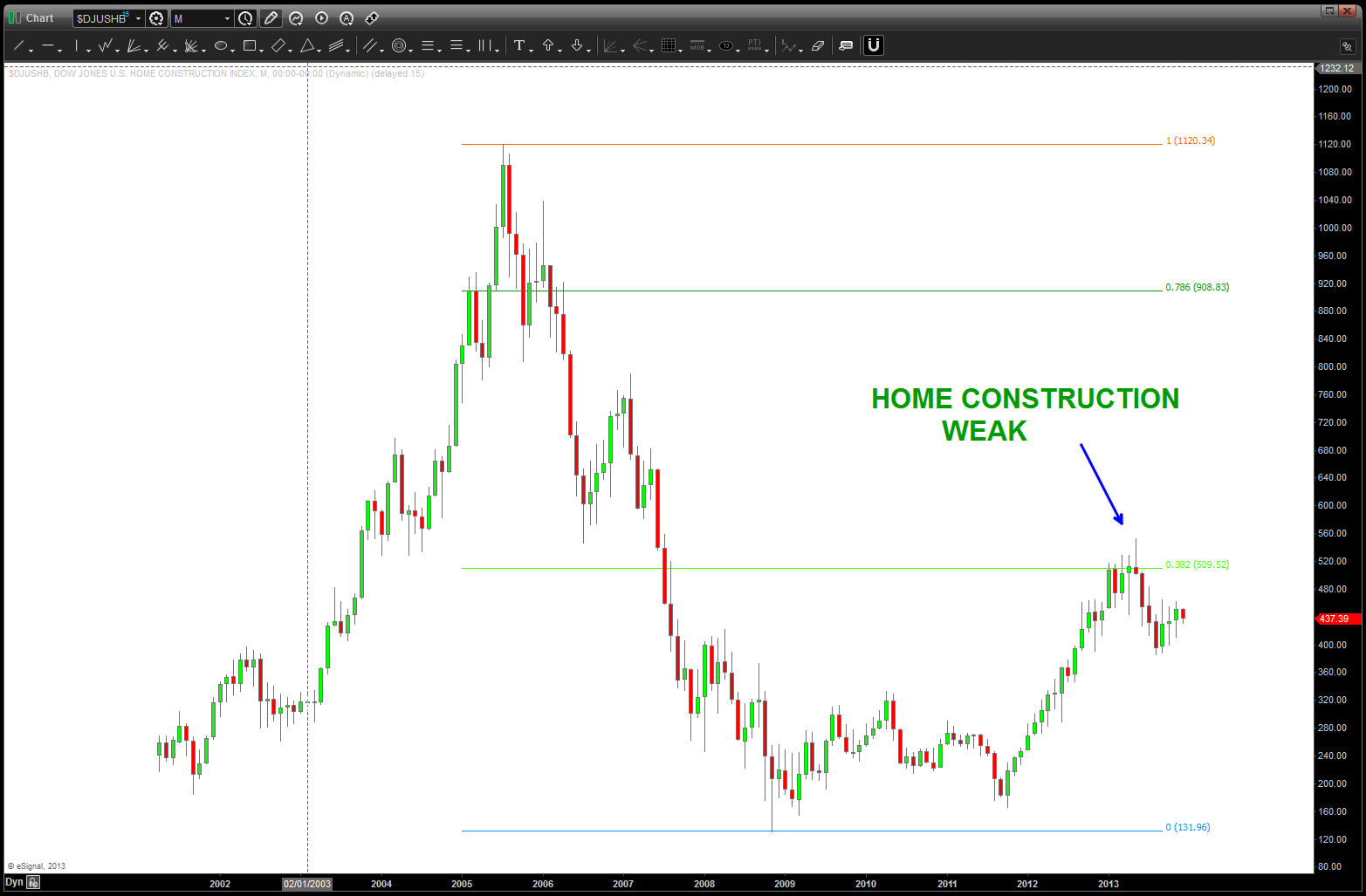
is it TIME for the EURO turn …. ?
Posted on December 6, 2013 Leave a Comment
one of my mentors, Mike Jenkins, taught me to look for “turns” or “patterns” every 656/710 hours. against the backdrop of the fixed stars that is the time, in hours, that it takes for the moon to make a full revolution. the 710 hours is elongated because the earth is also moving … I’m not asking for anyone to go hog wild and crazy but if the tides, menstrual cycles, animal cycles and a host of “other” things are governed by this object in the sky why not the market? just simply looking for an edge people …
so, if we take NOW and go back 656/710 hours we get: 11/6/2013 11:31:20 PM (710) and 11/9/2013 :31:20 AM (656) those areas are marked w/ orange vertical lines on the chart below. now, I like that, basically, this counter trend move (or so I THINK) has, essentially completed a cycle. and, I also like that the blue arrow is a measured move extreme that basically appeared right at the beginning of the bounce from 1.3294. also, you’ll see labeled a rare yet plausible “triple 3” correction – WXYXZ corrective move. now, for the most part, a combination is “usually” HORIZONTAL in nature however when we have a zig-zag (as we do in the first corrective move (labeled W) then it can continue to go at a steeper angle … either way, I see this move/advance as corrective.
the other to note is the daily high today is 1.05946*W projected from X. 1.05946 is the ratio used for tuning in the equal octave scale of music …I would like to see a close below 1.36827 on Sunday night/else 1.3717 could be attacked.
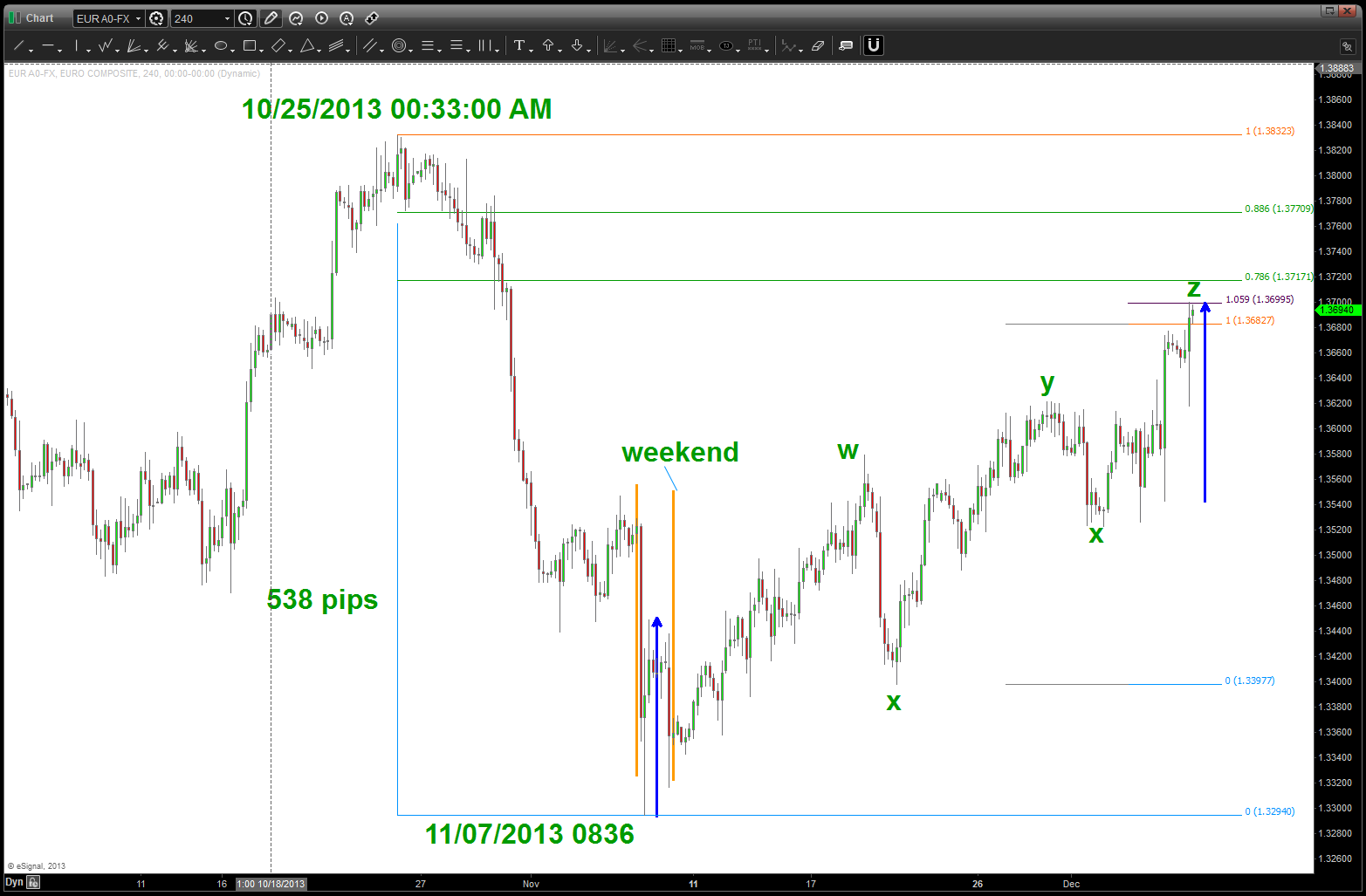
EUR vs USD 12/06/2013
is this overall DOLLAR weakness (well kind of) or is the EURO ready to turn against a bunch of pairs? let’s check …
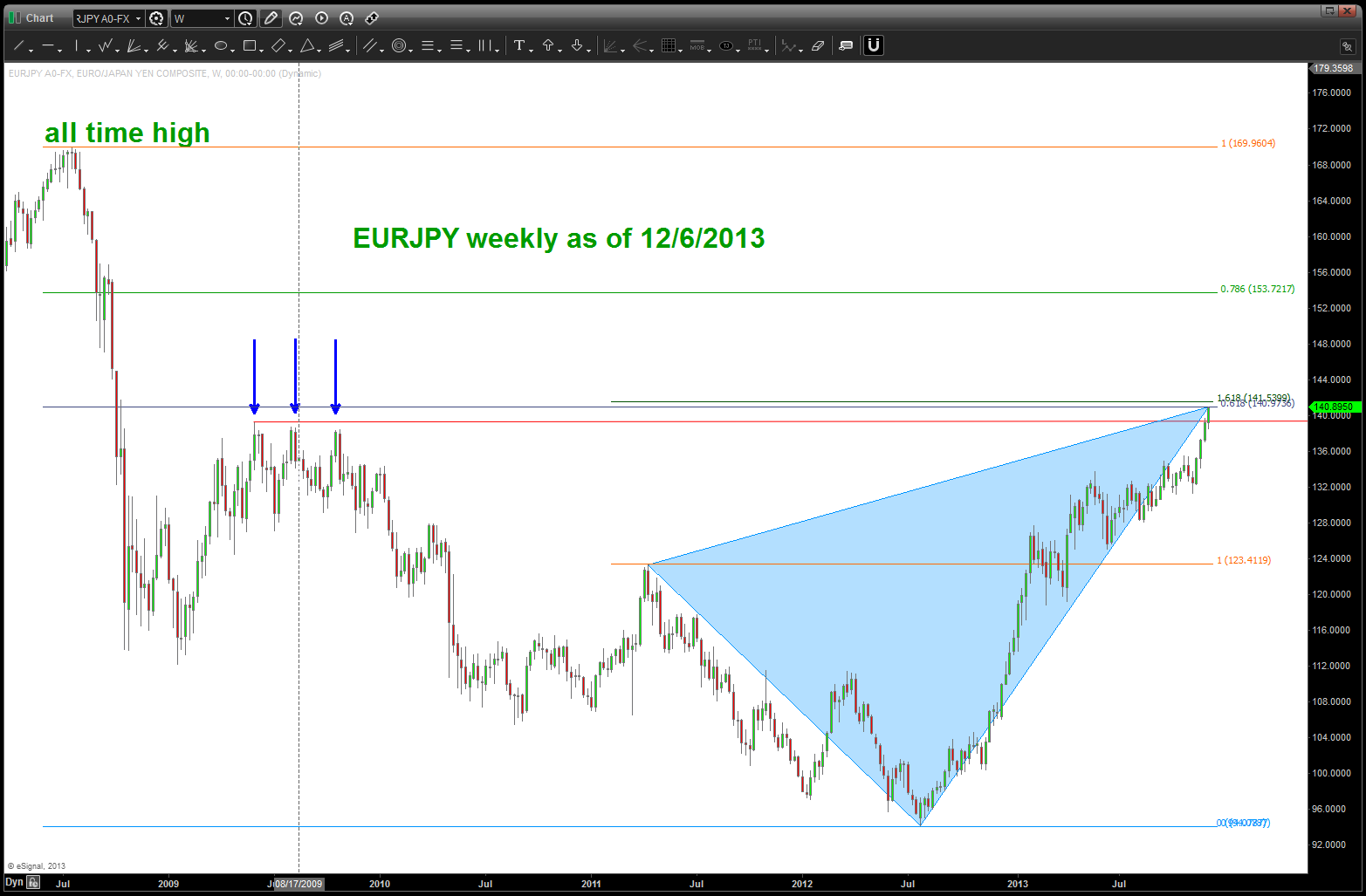
EURJPY attacking .618 from all time high and, a little higher, a major extension target
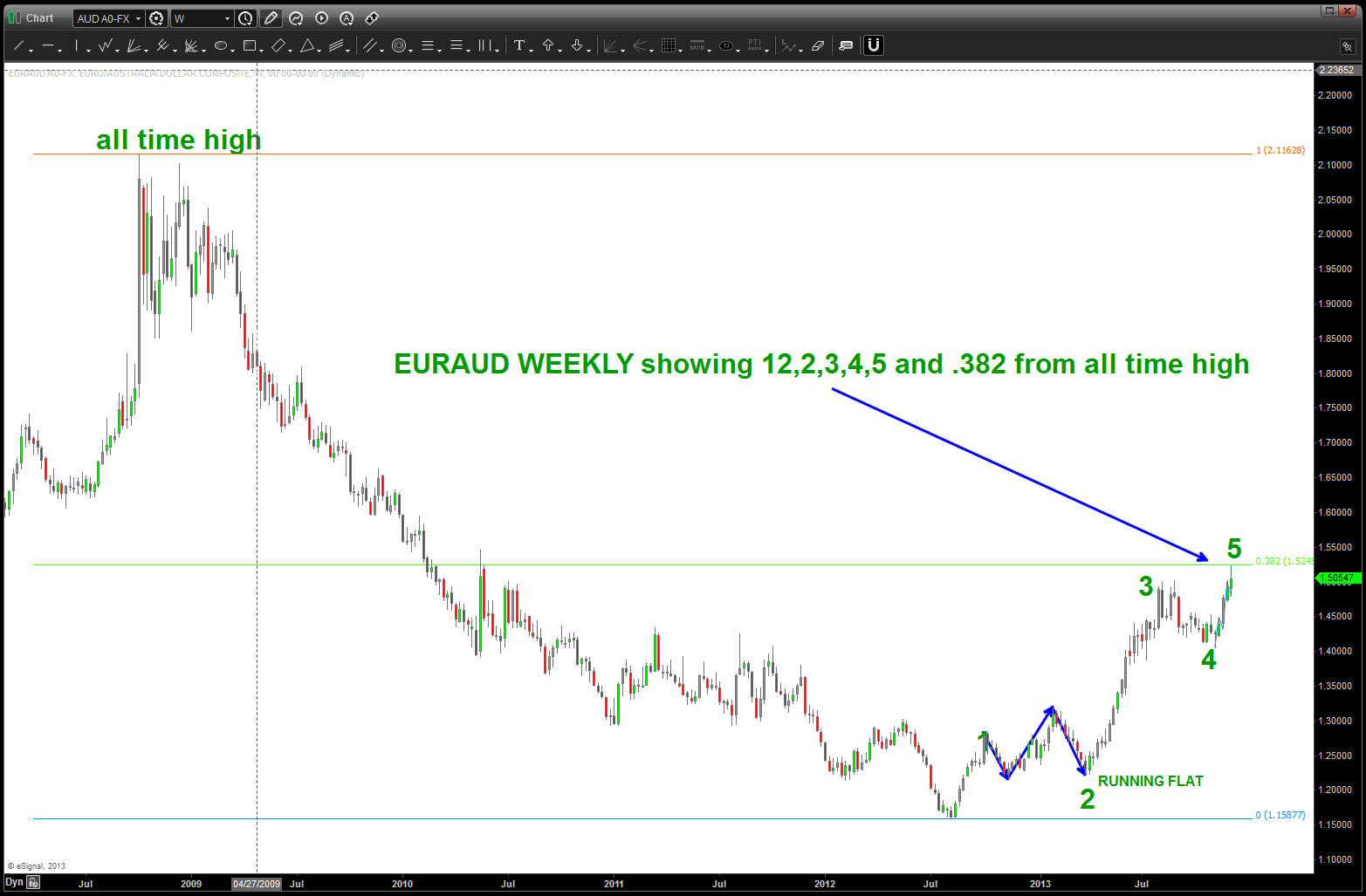
EURAUD showing 1,2,3,4,5 and .382 retracement
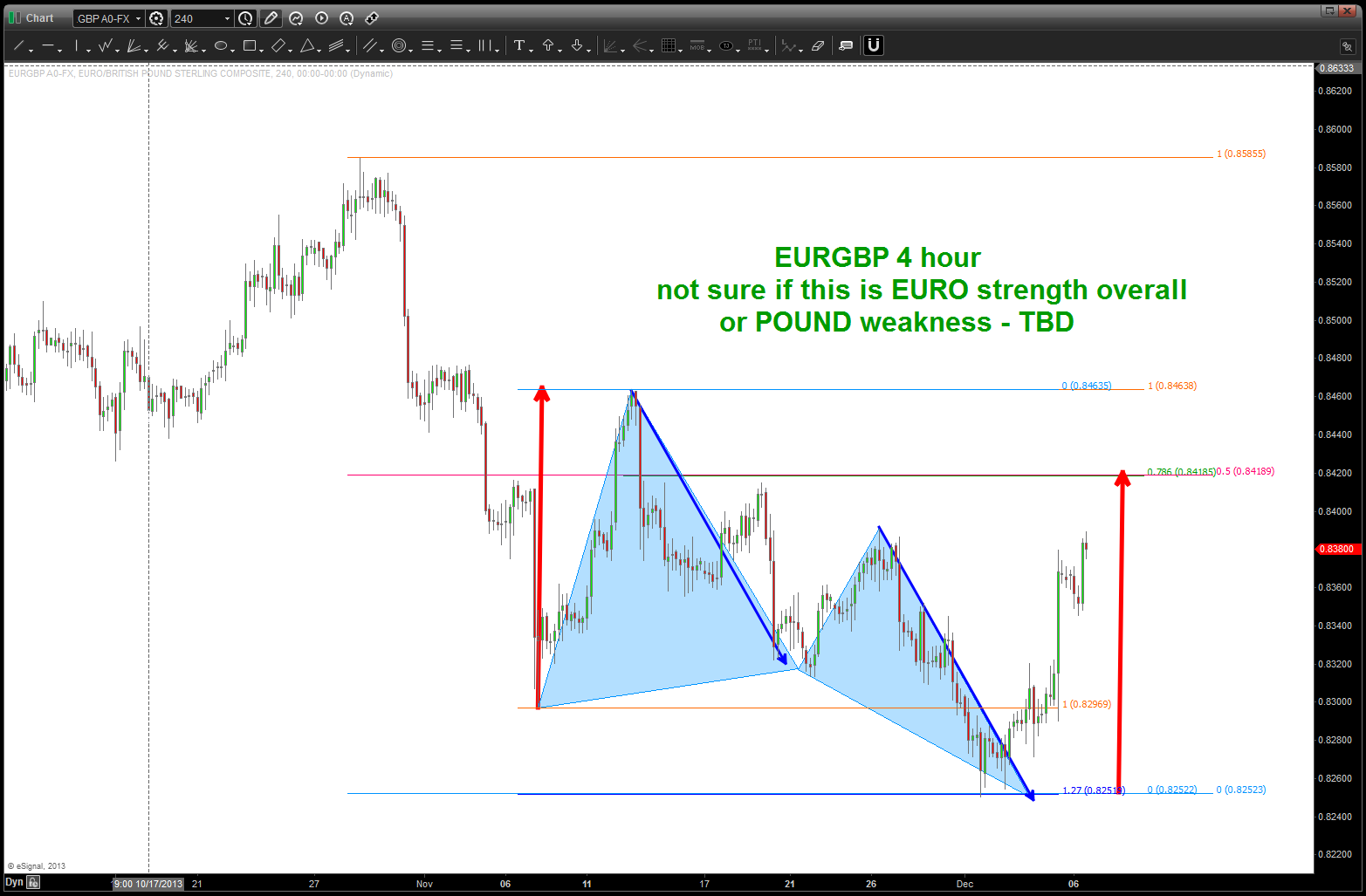
EURGBP a little higher w/ strong resistance at .8420
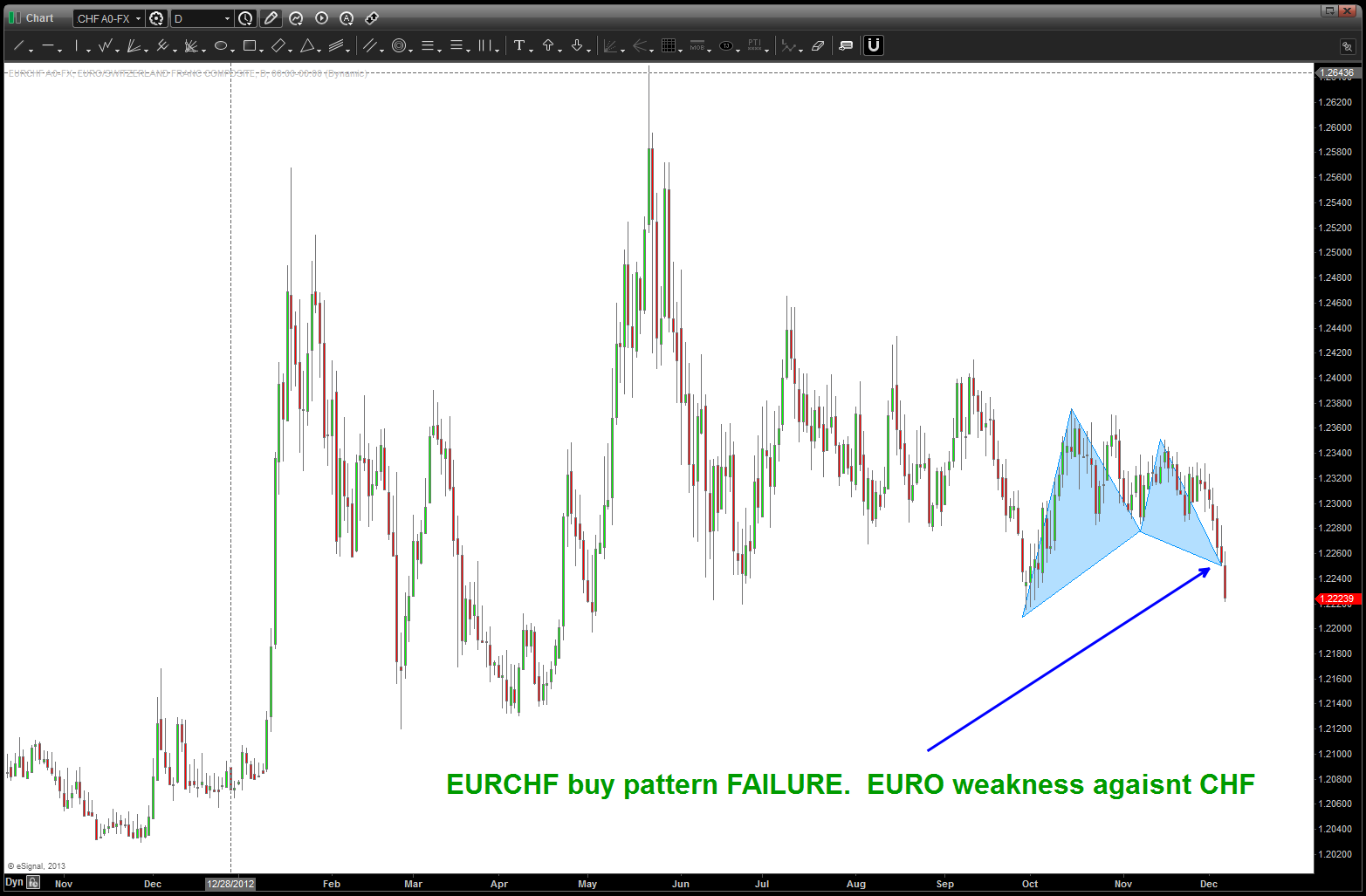
EURCHF BUY pattern failure
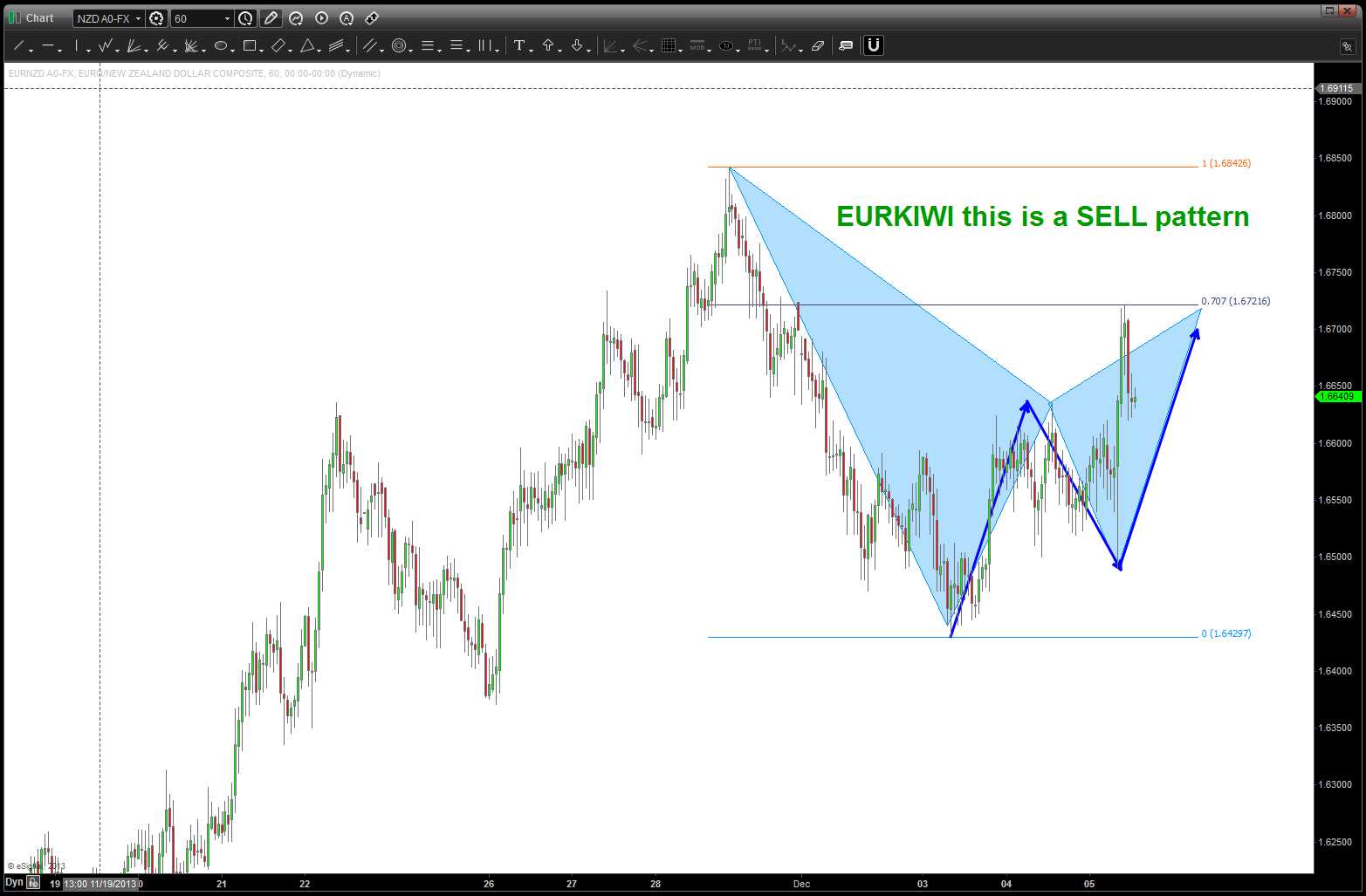
EUROKIWI SELL PATTERN from 12/05/2013
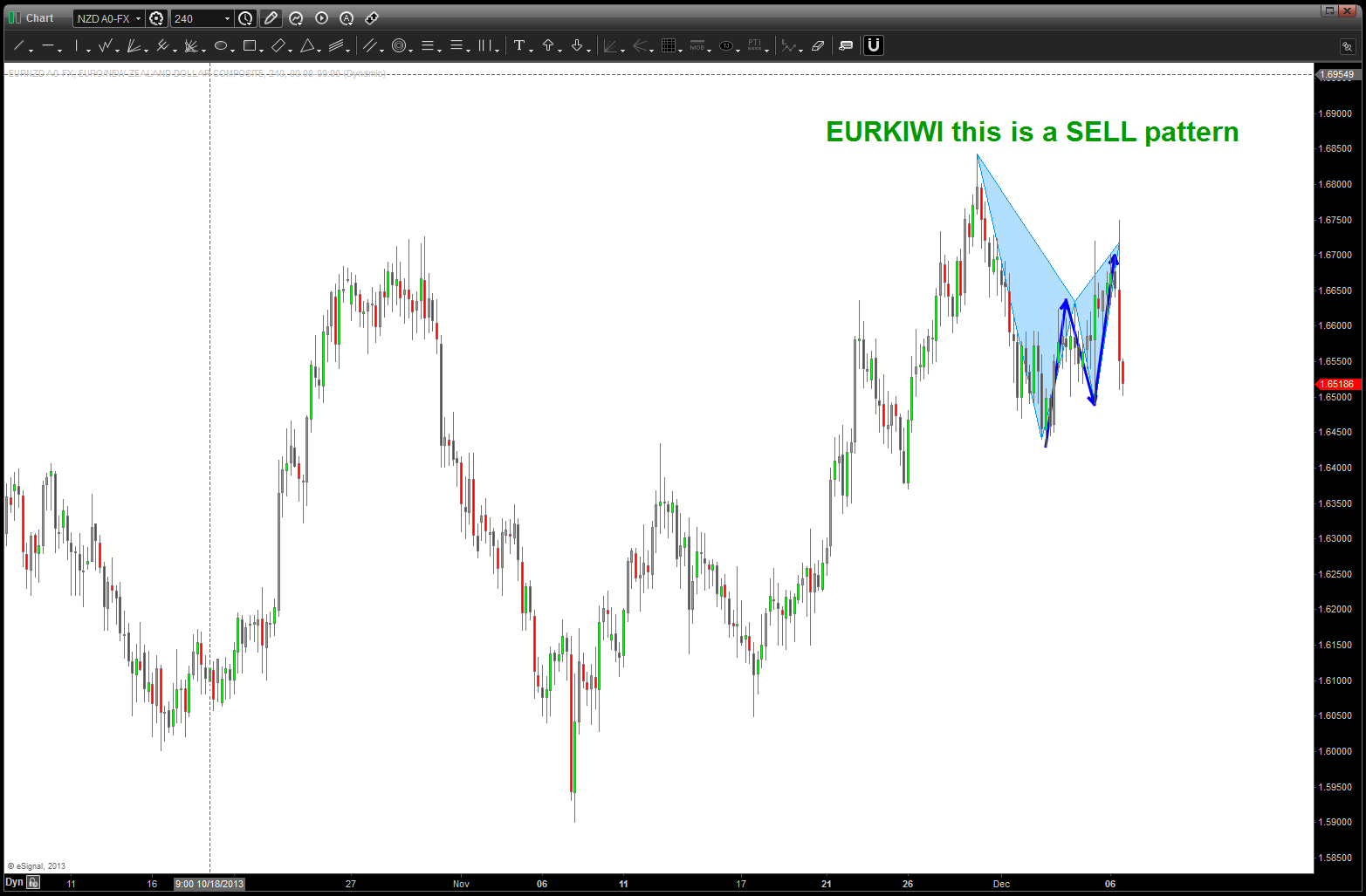
EUROKIWI sell pattern result from 12/05.
so, in summary, I believe a MAJOR turn is at hand for the EURO vs a number of crosses and the timing “appears” right for a potential turn in favor of the buck come Sunday night. TBD and we’ll see ….
NFP and the emini …
Posted on December 6, 2013 1 Comment
at 0830 EST today I’m going to be drinking a cup of coffee, more than likely meditating or playing some kick ass music but the farthest thing from my mind is going to be the NFP. this manipulated number has BILLIONS if not TRILLION of HFT (high frequency trading programs) going crazy on the BID/ASK w/ fraction of milliseconds execution. how can a pattern recognition trader in his home office compete w/ that … not that I can’t, I’m just not …
how about the EURO yesterday? some fundamental announcement about inflation (if you don’t have inflation could you have DEFLATION (?)) and the EURO gets hammered and then, out of no where, the BID comes in (read: our FED) and today wasn’t the day and KABOOM it’s gone higher …FX is a wonderful, 4 trillion dollar/day market. the gorillas are big and they juggle dynamite!
I digressed …here’s what I “see” – note a a very symmetrical 5 wave move down and now the “typical” three wave move up and a PATTERN completing in/around 1800. Upper targets are shown and they could be hit …
bottom line – grab a cup of Joe or
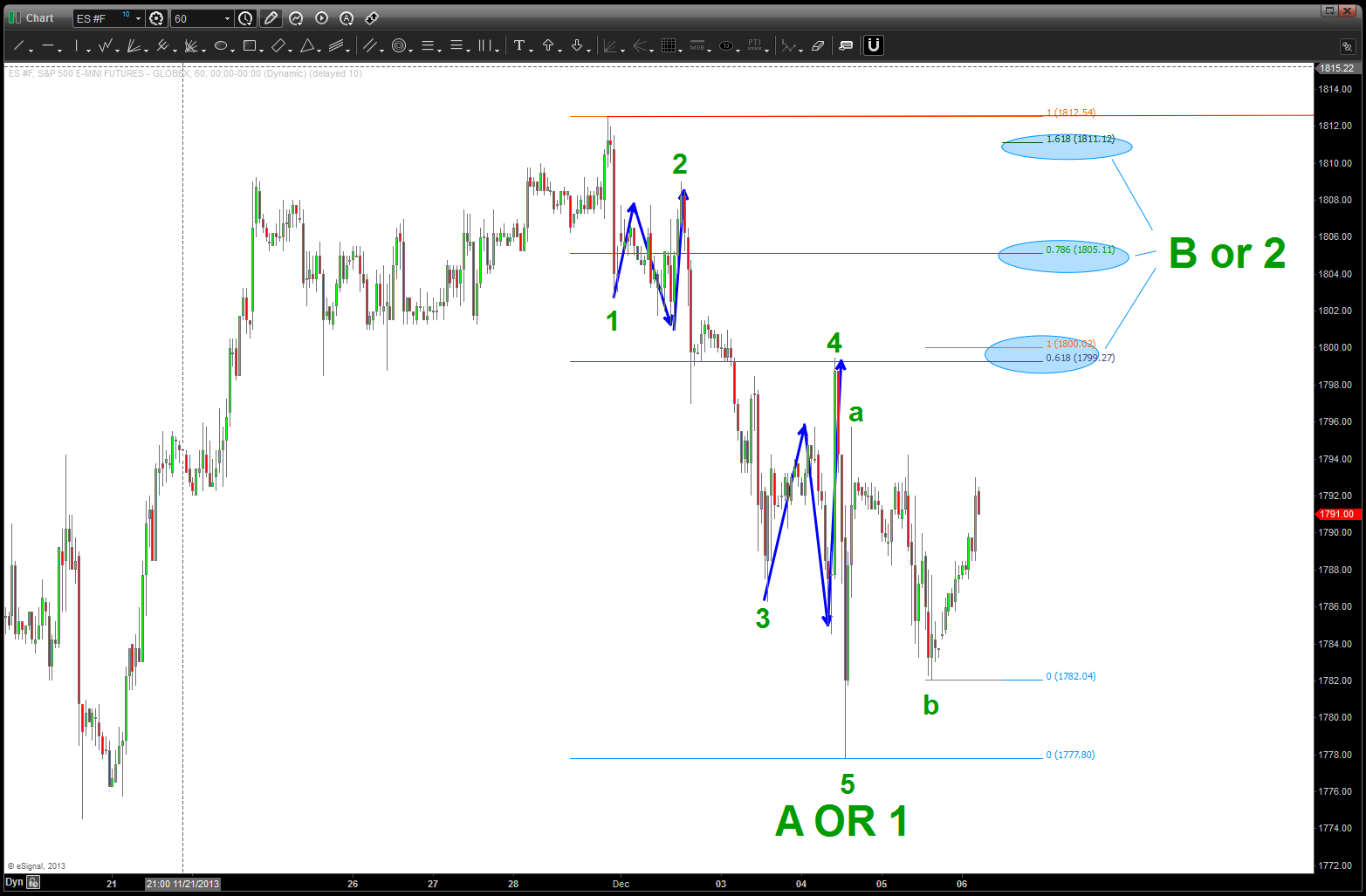
E mini before non farm
Green Tea and just sit on your hands. things will settle down, a pattern will appear and let it rip.
AAPL and GOOG patterns completing …
Posted on December 6, 2013 2 Comments
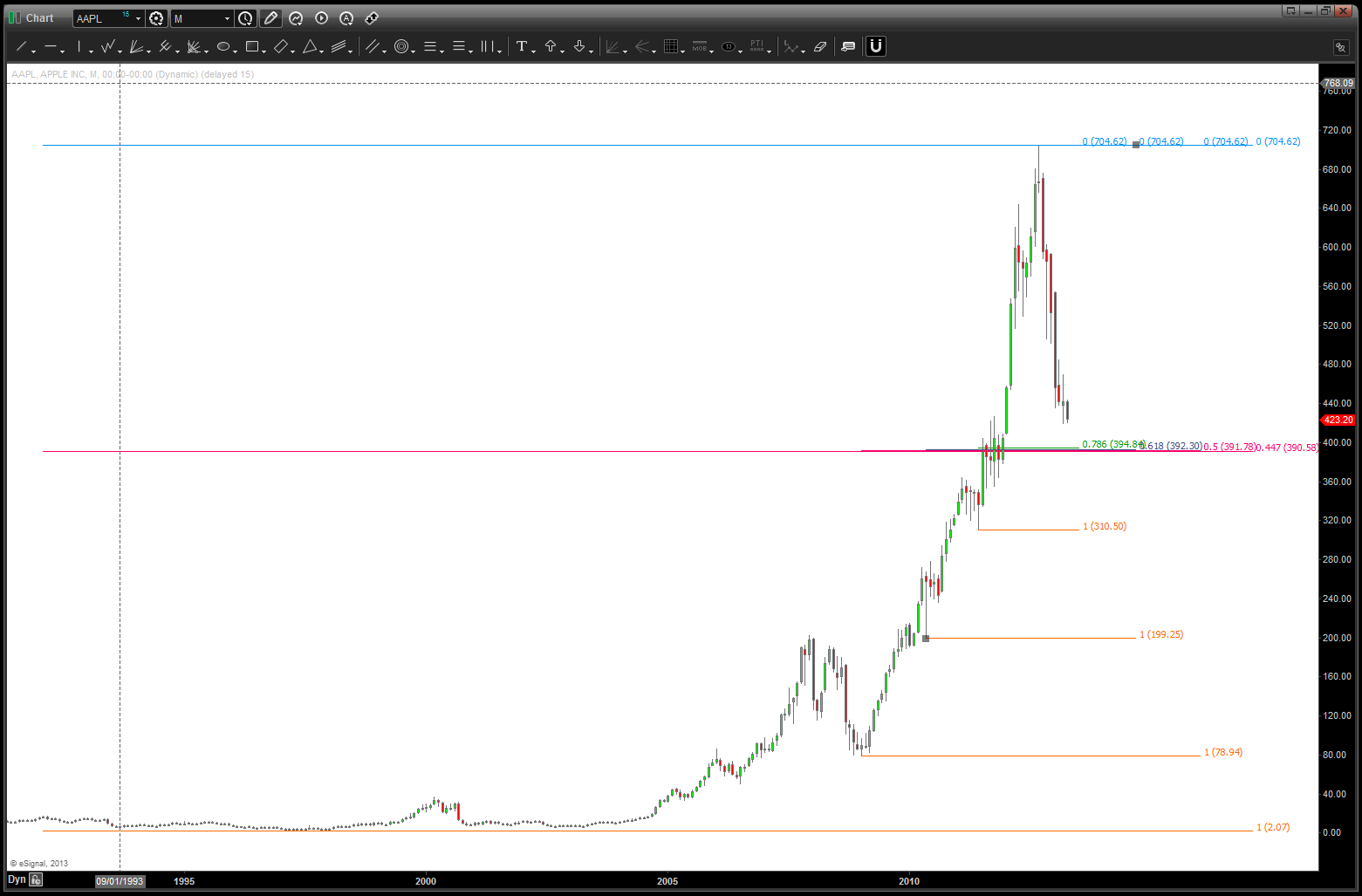
here was the geometry for the top in AAPL:
https://bartscharts.com/2013/08/20/sir-issac-newton-and-aapl-fell-from-the-tree/
here was the geometry for the low in AAPL:
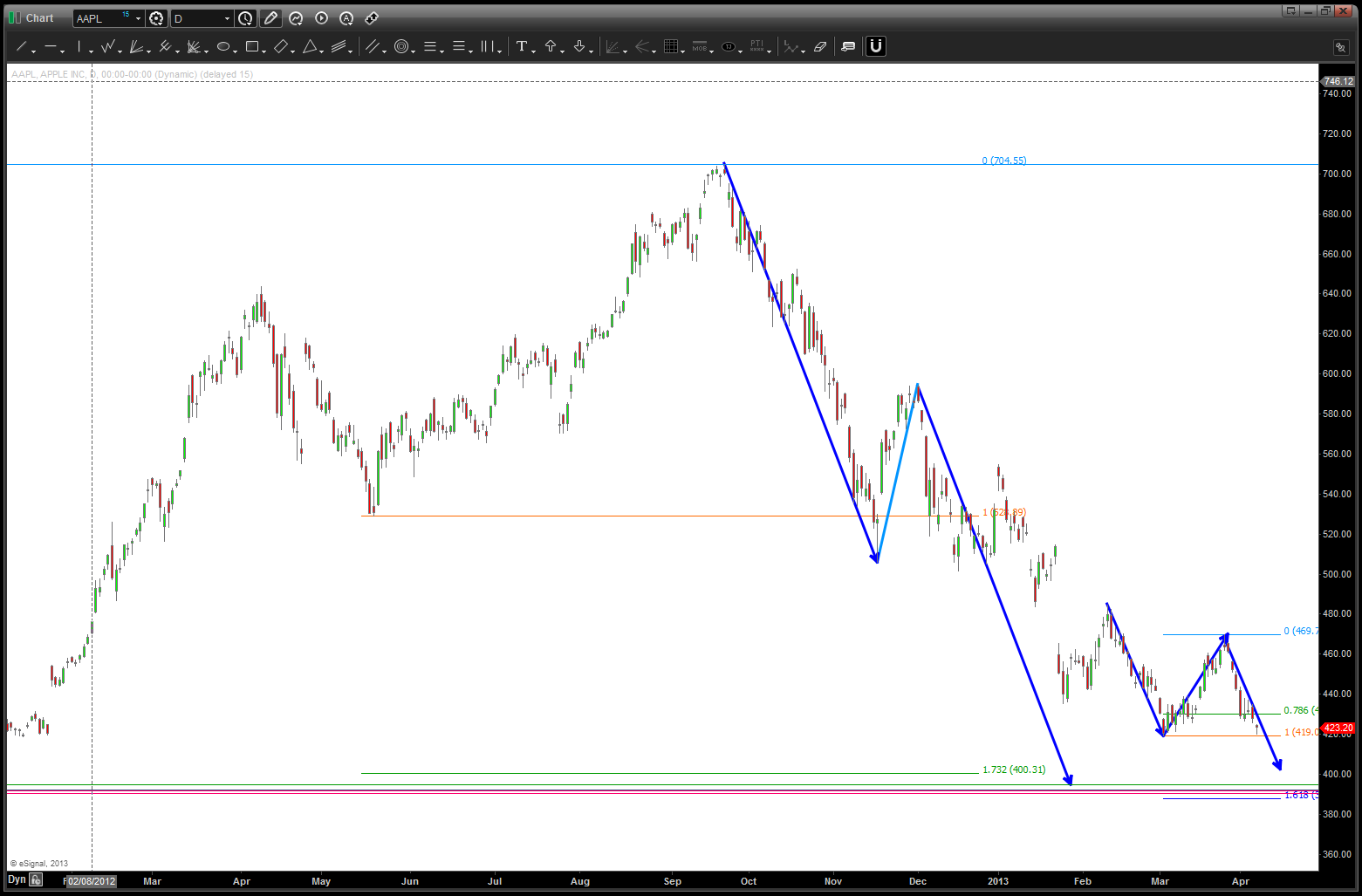
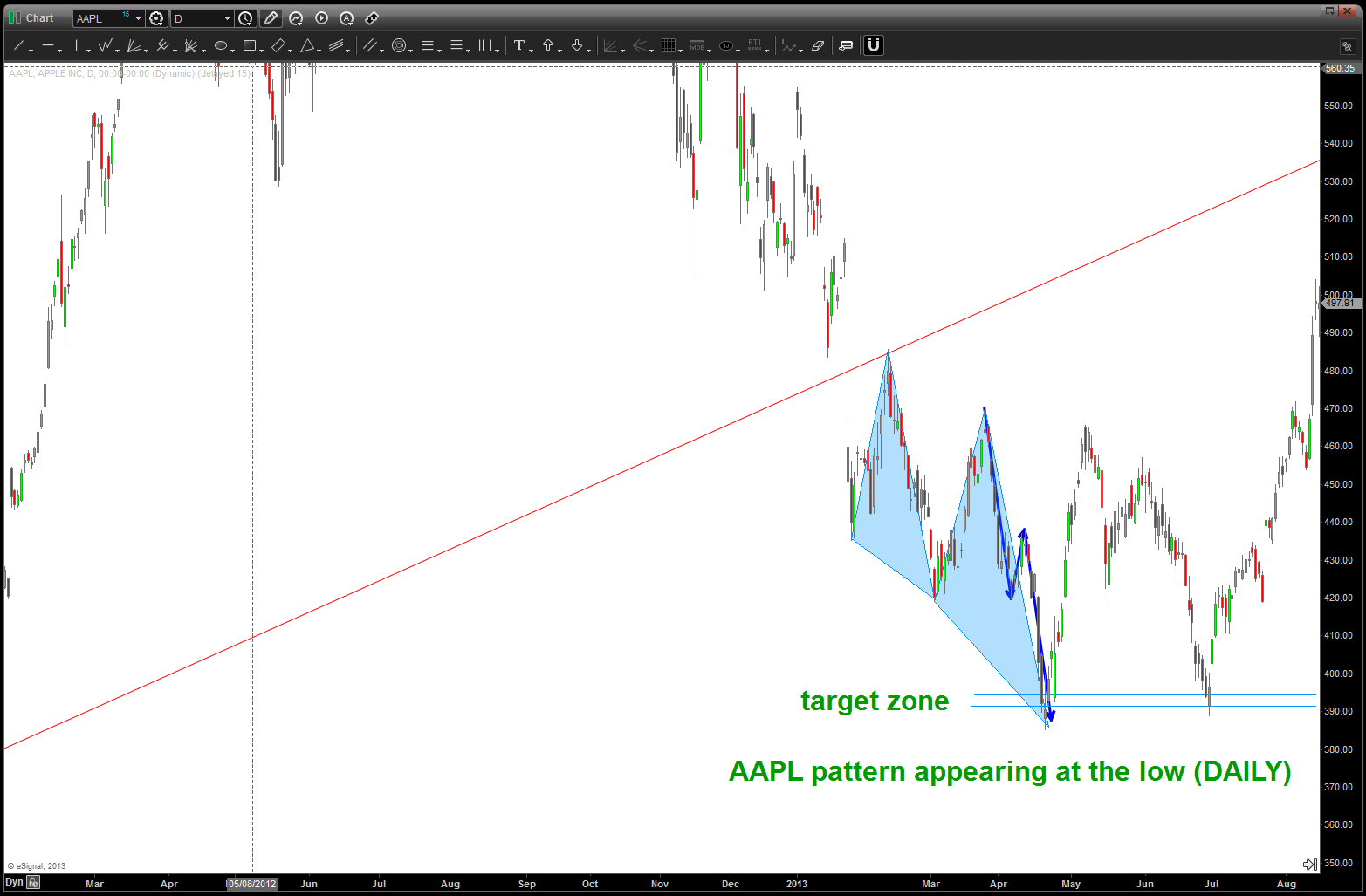
as we approached the low a very symmetrical 3 drives to a bottom appeared:
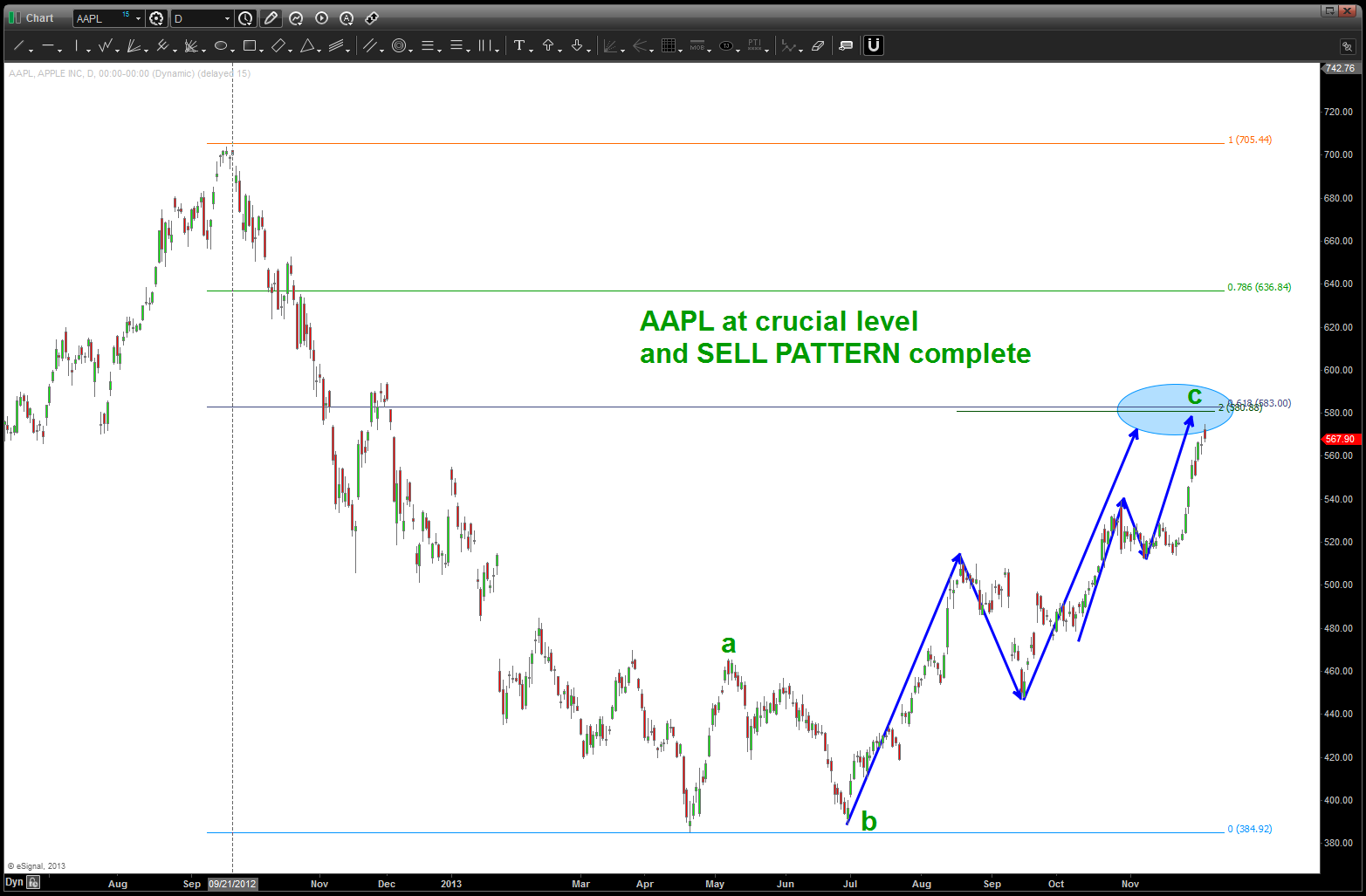
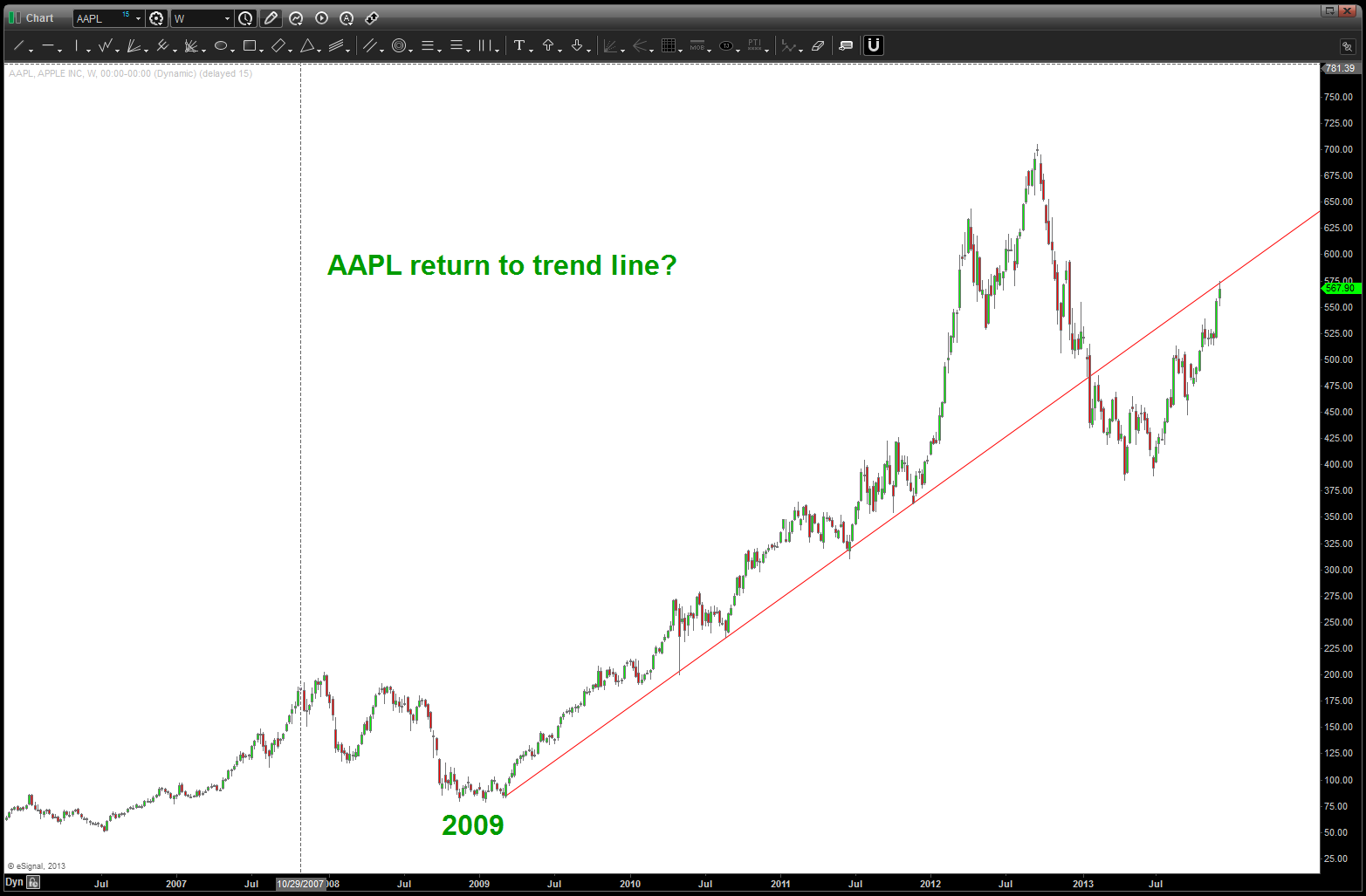
the “first” top that appeared gave us a sell signal and about 70 bucks but the market moved up and higher …now, we are completing another pattern along w/ returning to the trend line on AAPL. So, this is a very crucial juncture for the market …
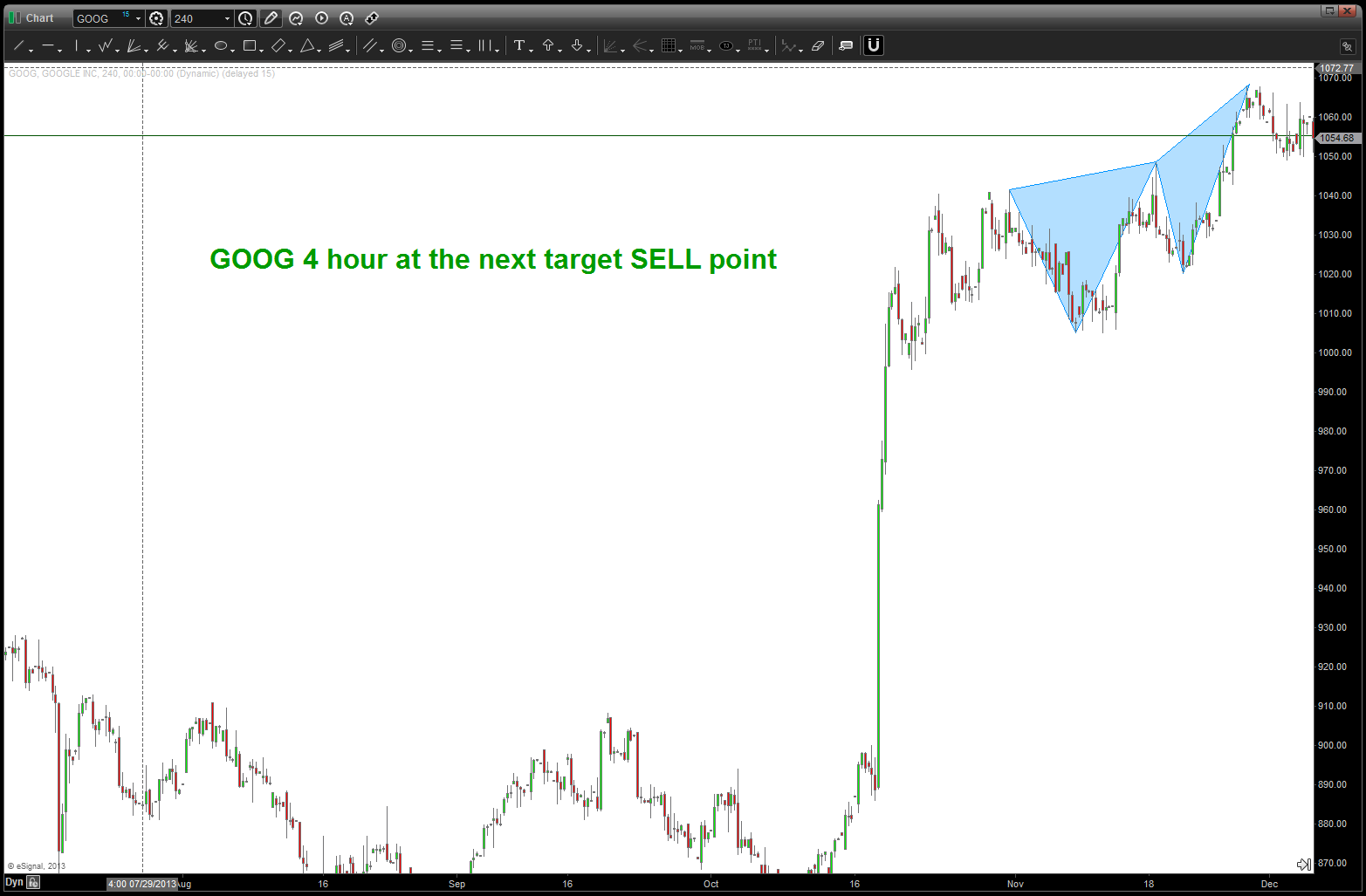
GOOG — how UnAmerican can you get – trying to short GOOG? Well, it’s just numbers and patterns so guess what we are “there” again w/ GOOG so after the near knockout punch of a simple 100 point gap in your face – why not?
here’s the blog of the “next” target:
https://bartscharts.com/2013/10/21/more-pumpkin-soup-added-a-new-ingredient-to-the-recipe-goog/
here’s the update: